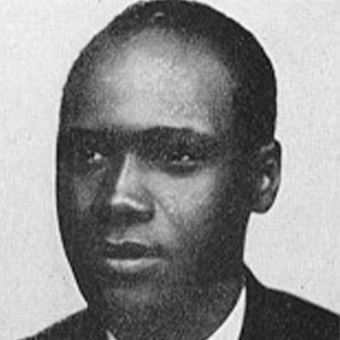
Alioune Diop
Senegalese publisher, editor, cultural organizer, and former French Senate representative
of 100 · stable trend · Visibly decent and improving
Standing
75/100
Raw Score
63/85
Confidence
78%
Evidence
Strong
About
Diop's record is most clearly positive in institution-building: he opened publishing and debate space for African and diaspora writers, backed practical reforms while in the Senate, and kept a broad, dialogic platform alive through censorship and scarcity. The main caution is that much of the public record is about cultural leadership rather than private household conduct, so some dimensions remain less observable than his civic influence.
The observable pattern points to strong social care, sturdy integrity, and unusually constructive pressure behavior. His Christian commitment and Vatican II involvement support a meaningful belief-and-worship score, but not an unquestioned maximum because daily devotional practice is not richly documented in public.
Five Pillars
Pillar scores (0–100%)
Diop scores best where public evidence is strongest: institution-building for excluded voices, unusually broad dialogue, and steadiness under colonial and postwar pressure. The profile remains under review because family-level care and private devotional routine are much less visible than his cultural and civic leadership.
Goodness over time
Starts at 100 at birth, natural decay after accountability age, timeline events adjust the trajectory.
17 Criteria Scores
Individual item scores (0–5) with evidence notes
Core Worldview
Public Christian commitment and later religious dialogue work support a strong theistic score.
He repeatedly framed culture and public life in moral-responsibility terms larger than self-advancement.
His religious formation and intellectual posture suggest more than a purely material outlook, though public detail is limited.
Bible literacy, Catholic commitment, and Vatican II engagement point to meaningful scripture-guided life.
The record implies respect for Christian exemplars, but public documentation is less explicit on this item than on belief generally.
Contribution to Others
The public record is not rich on kin-specific provision.
His institutions clearly helped younger writers and students find voice and recognition.
Senate welfare proposals and publishing access both point to practical concern for blocked and disadvantaged communities.
He deliberately connected African, Caribbean, American, and European black intellectual worlds.
The publishing house and review were built as a response to the need for space and circulation voiced by excluded authors and thinkers.
The public pattern strongly supports cultural emancipation, anti-colonial dialogue, and rights-oriented reform.
Personal Discipline
Public Catholic commitment and church-linked convening suggest real devotional discipline, though routine practice is not exhaustively documented.
His life shows disciplined service and institution-building, but direct evidence of regular financial giving is thinner.
Reliability
Decades of steady mission and a documented refusal to collapse into sectarian closure support a strong integrity score.
Stability Under Pressure
He kept building the review despite scarce postwar resources and delayed support.
Political disappointment and minority status did not break his longer institutional commitments.
He maintained his platform through censorship, decolonization conflict, and ideological contest.
Timeline
Key events and documented turning points
Elected to the French Senate and advanced overseas social reforms
The French Senate records that Diop won election in December 1946 and in office backed school canteens in French Equatorial and West Africa, land-rights protections, disability support, and African housing cooperatives.
→ Shows that his public commitments were not only literary; he used office to press for concrete welfare and rights measures.
highFounded Présence Africaine as an open platform for African and diaspora thought
Diop launched Présence Africaine in Paris in 1947 and explicitly framed it as a space not bound to one ideology, centered on African texts, African civilization, and dialogue across the black world.
→ Created a durable forum that widened representation and intellectual access for excluded voices.
highBuilt the Présence Africaine publishing house to extend access beyond the journal
Two years after founding the journal, Diop created the Présence Africaine publishing house to give African and diaspora thinkers better conditions of diffusion and accessibility across the world.
→ Turned a magazine into a longer-lived institutional infrastructure for publication, translation, and circulation.
highOrganized the first Congress of Black Writers and Artists and helped form the Société Africaine de Culture
Diop convened the 1956 Sorbonne congress that brought together black writers and artists from Africa, the Caribbean, the Americas, and Europe, and the related network later consolidated into the Société Africaine de Culture.
→ Demonstrated unusual coalition-building capacity and strengthened a transnational movement for cultural emancipation.
highGathered African intellectuals around Vatican II and interreligious reflection
Public Catholic and Vatican-linked accounts credit Diop with convening African intellectuals, regardless of religious affiliation, to help African bishops think through questions raised by the Second Vatican Council.
→ Supports a reading of Diop as a serious religious intellectual who used belief to widen dialogue rather than close it.
mediumA Présence Africaine issue was seized by French authorities
The French Senate biography notes that a 1962 issue of the review devoted to the Antilles and Guyana was seized by the Paris prosecutor for purported state-security reasons, while also stressing that Diop kept pursuing dialogue with the West.
→ Reveals the pressure surrounding his platform and his preference for principled persistence over sectarian closure.
mediumCo-organized the First World Festival of Negro Arts in Dakar
Présence Africaine and related biographies credit Diop and Léopold Sédar Senghor with organizing the 1966 world festival in Dakar, extending Diop's institution-building from print culture into a continental arts event.
→ Expanded his earlier publishing and congress work into a major post-independence cultural gathering.
highPressure Tests
Behavior under crisis or scrutiny
Founding Présence Africaine under postwar scarcity
1947Diop needed years of wartime and immediate postwar networking before he had enough support to launch the review.
Response: He persisted, gathered cross-continental backing, and opened the platform anyway.
positiveManaging ideologically diverse black intellectual networks
1956The congresses and institutions he organized brought together figures with sharply different political commitments in a Cold War and decolonization setting.
Response: He kept the platform intentionally broad instead of narrowing it to one faction.
positive1962 seizure of a Présence Africaine issue
1962French authorities seized a review issue tied to Antilles and Guyana debates.
Response: He maintained a dialogic, anti-colonial platform rather than retreating into silence or sectarianism.
positiveProgression
crisis years
Censorship, colonial pressure, and ideological tension tested the platform without collapsing its core mission.
tested_but_steadycurrent stage
His legacy is now read mainly through the durable institutions and conversations he helped found.
stable_legacyearly years
Classical study, teaching, and layered Muslim-Christian formation pushed him toward mediation rather than isolation.
toward_commitmentgrowth years
From Senate work into publishing and congress-building, his influence broadened from representation to institution-building.
broadeningBehavioral Patterns
Positive
- • Repeatedly created institutions that outlived the moment instead of relying on one-off gestures.
- • Preferred coalition-building and dialogue across ideologies, religions, and geographies.
- • Turned cultural prestige toward access for other writers, thinkers, and artists.
Concerns
- • The public record says much more about cultural influence than about household obligations or private charity.
- • Some judgments depend on retrospective institutional memory rather than dense day-to-day personal documentation.
Evidence Quality
6
Strong
1
Medium
0
Weak
Overall: strong
This profile evaluates observable public behavior and evidence, not the state of a person's soul.