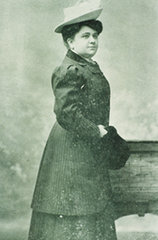
Marija Juric Zagorka
Journalist, novelist, and women's rights activist
of 100 · stable trend · Visibly decent and improving
Standing
66/100
Raw Score
56/85
Confidence
68%
Evidence
Medium high
About
Marija Juric Zagorka was Croatia's first professional woman journalist, a popular novelist, and a feminist public figure who used journalism, fiction, and women's periodicals to challenge gender exclusion and national-cultural domination.
Her public life shows strong social care, integrity in commitments to women's public voice, and unusual resilience under family coercion, newsroom exclusion, political imprisonment, wartime censorship, and postwar marginalization. Religious belief and worship are only lightly observable beyond Catholic background and convent schooling, so those dimensions are scored cautiously rather than punitively.
Five Pillars
Pillar scores (0–100%)
Strong observable alignment in social care, integrity, and resilience; cautious belief and worship scores reflect limited public evidence rather than contrary evidence.
Goodness over time
Starts at 100 at birth, natural decay after accountability age, timeline events adjust the trajectory.
17 Criteria Scores
Individual item scores (0–5) with evidence notes
Core Worldview
Catholic background is documented; mature devotional evidence is limited.
Catholic background is documented; mature devotional evidence is limited.
Catholic background is documented; mature devotional evidence is limited.
Catholic background is documented; mature devotional evidence is limited.
Catholic background is documented; mature devotional evidence is limited.
Contribution to Others
Little direct public evidence; not treated as contrary evidence.
Inferred from sustained advocacy for excluded women and younger women writers.
Public work addressed people constrained by language, gender, and social exclusion.
Early reporting criticized Hungarian-only train-station language that cut off Croatian passengers.
Public advocacy created platforms for readers and women writers.
Career consistently challenged gender and political constraints.
Personal Discipline
Routine worship practice is not strongly documented in public sources.
Disciplined religious giving is not strongly documented in public sources.
Reliability
Sustained delivery across decades despite pressure.
Stability Under Pressure
Late-life poverty and publishing hardship are documented.
Repeatedly rebuilt after coercive marriage, exclusion, and personal crisis.
Documented pressure under repression, imprisonment, and wartime censorship.
Timeline
Key events and documented turning points
Birth and Catholic baptismal record
Government biography cites parish birth records showing Marija Juric, baptismal name Mariana, was born in Negovec near Vrbovec in 1873.
→ Provides identity baseline and modest public evidence of Christian formation.
mediumEntered Obzor and challenged gender exclusion in journalism
Zagorka became a journalist at Obzor despite newsroom resistance to a woman reporter and wrote on public language access and politics.
→ Opened a public path for women in Croatian journalism.
highEdited Obzor under repression and endured imprisonment
During Khuen-Hedervary's repression, Zagorka reportedly edited Obzor while senior editors were imprisoned and endured solitary confinement for organizing demonstrations.
→ Shows public courage and persistence when political and gender pressures converged.
very_highPublished and edited Zenski list
Zagorka founded and edited Zenski list from 1925 to 1938, personally writing much of the magazine and advancing feminist, cultural, and patriotic themes.
→ Created a sustained public platform for women's voices.
highHrvatica banned and property seized under Ustase rule
After founding Hrvatica in 1939, Zagorka faced wartime persecution when authorities banned the magazine and seized copies, subscription money, and property.
→ A major pressure test showing the cost of sustained independent publishing under authoritarian conditions.
very_highPressure Tests
Behavior under crisis or scrutiny
Forced marriage and attempted pathologizing
1891An arranged marriage and later accusations of mental instability constrained her autonomy.
Response: She returned to Croatia, pursued divorce, and rebuilt a public writing life.
strong_resilience1903 political repression
1903Obzor leadership was imprisoned and she faced solitary confinement for anti-Magyarization activism.
Response: She continued editorial and civic work under pressure.
strong_resilienceWartime censorship of Hrvatica
1941Authorities banned her magazine and seized materials and funds.
Response: She endured severe hardship and later resumed public cultural work.
resilient_but_costlyBehavioral Patterns
Positive
- • Barrier-breaking professional work for women in journalism
- • Long-term feminist publishing and literary production
- • Courage under political repression and censorship
Concerns
- • Limited direct evidence of private worship discipline
- • Limited evidence of direct material charity outside public advocacy
Evidence Quality
4
Strong
3
Medium
1
Weak
Overall: medium_high
This profile evaluates observable public evidence, not hidden intention, inner faith, salvation, or final moral worth.