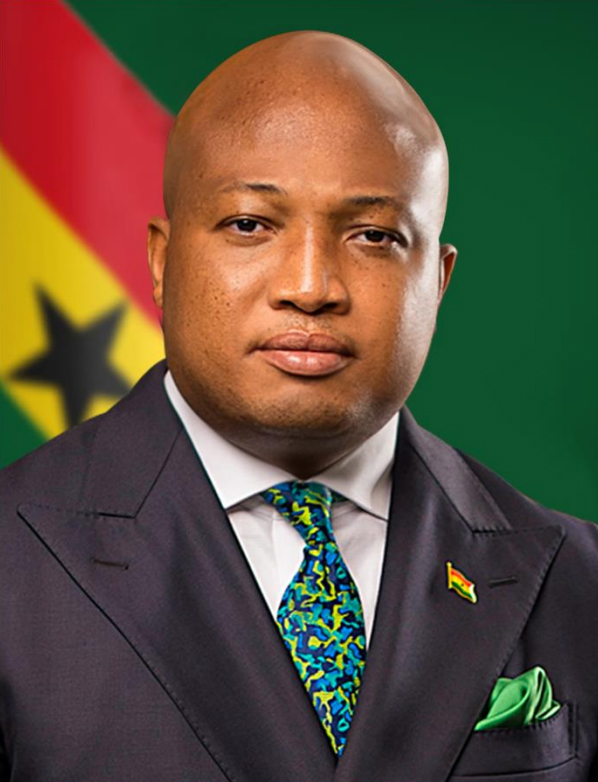
Samuel Okudzeto Ablakwa
Ghanaian foreign minister and four-term member of parliament for North Tongu
of 100 · improving trend · Visibly decent and improving
Standing
75/100
Raw Score
63/85
Confidence
69%
Evidence
Strong
About
Samuel Okudzeto Ablakwa is a high-visibility Ghanaian politician whose strongest public proof lies in anti-corruption oversight, constituency relief work, and visible advocacy for Ghanaians facing danger or exclusion abroad. The main cautions are that some of his most aggressive corruption allegations remain disputed or only partly validated, and the public record is much thinner on private worship and family-specific obligations than on his civic and political conduct.
The observable pattern is meaningfully constructive. He repeatedly converts office and public attention into concrete interventions for flood victims, migrants, and citizens caught in diplomatic crises, while also taking politically costly anti-corruption positions. The profile remains under review because his record is highly adversarial, some allegations he has advanced were rebutted in part by public institutions, and the evidence for private spiritual discipline is fair but not deep.
Five Pillars
Pillar scores (0–100%)
Ablakwa's public record shows repeated outward care and above-average resilience, with his best proof coming from anti-corruption pressure and visible interventions for people in crisis. He falls short of a higher tier because private worship evidence is limited and some high-profile allegations remain materially contested.
Goodness over time
Starts at 100 at birth, natural decay after accountability age, timeline events adjust the trajectory.
17 Criteria Scores
Individual item scores (0–5) with evidence notes
Core Worldview
Public record clearly identifies him as Christian and he explicitly rejects using God-language to excuse corruption.
His public moral language treats corruption and leadership as matters of real accountability, not mere optics.
The record supports a theistic moral worldview, but this dimension is less richly documented than his civic conduct.
Christian identity, church-facing statements, and leadership in a Christian educational institution support a strong score.
Biblical and church-referenced public language is present, but direct prophetic-model evidence is moderate rather than deep.
Contribution to Others
Public evidence centers on constituency and national service rather than family-specific support.
Scholarships, education work, and youth-facing public commitments show repeated support for younger people.
Flood housing, relief mobilization, and rent support show concrete help for people trapped in crisis.
His foreign-ministry work repeatedly centers migrants, detainees, deportees, and citizens abroad under pressure.
He has a visible pattern of responding to petitions and constituency distress with public follow-through.
Anti-corruption work and mission cleanup aim at removing exploitative or abusive constraints inside public systems.
Personal Discipline
Public Christian commitment and church-linked roles support a positive score, though private daily practice remains mostly private.
The record shows charitable and relief-oriented action, but direct evidence of disciplined personal giving is moderate.
Reliability
Repeated public accountability work and costly cleanup choices support a strong score, tempered by some disputed allegations.
Stability Under Pressure
He stayed active in long, resource-heavy public fights and flood-response work rather than stepping back under strain.
He absorbed lawsuits, rebuttals, and political pressure without visible withdrawal from public duty.
His interventions on embassy fraud, wartime detainees, and xenophobic attacks show steadiness in high-pressure settings.
Timeline
Key events and documented turning points
Entered national executive office as deputy minister
Ablakwa entered Ghana's national executive as deputy minister for information, beginning a sustained period of public office at a relatively young age.
→ Established a long-term public-service track that later expanded into education, parliament, and foreign affairs.
mediumOpened housing support for Akosombo dam spillage victims
He inaugurated the second phase of a housing project for constituents displaced by the Akosombo dam spillage and later backed the response with an emergency rent fund.
→ Hundreds of displaced people received transitional shelter support and the issue remained publicly prioritized.
highPetition work on National Cathedral helped produce an official corruption finding
After a long public pressure campaign over the National Cathedral project, CHRAJ published a report saying procurement violations warranted contract cancellation and possible further investigation of trustees.
→ His oversight effort gained real institutional backing, even though some related identity allegations against another figure remained disputed.
highDelivered the ORAL anti-corruption committee report
As chair of Operation Recover All Loot, Ablakwa presented a report to the presidency summarizing 36 high-value cases and more than two thousand public complaints.
→ The report was formally handed to the attorney general for investigation, reinforcing his public accountability image.
highPublicly addressed U.S. deportations affecting Ghanaians
He used parliament to explain the changing U.S. deportation environment and frame the issue as a duty of protection toward Ghanaian migrants.
→ The issue received a formal diplomatic and parliamentary response rather than being treated as a private migrant problem.
mediumClosed Ghana's Washington mission temporarily after fraud findings
After a special audit found alleged fraud, conflict of interest, and corruption in visa and courier operations at Ghana's Washington mission, Ablakwa defended the temporary closure and recall of staff.
→ He chose an institutionally costly cleanup path and promised continuing reforms and legal follow-through.
highVisited Ukraine to seek protection for Ghanaian prisoners of war
He traveled to Ukraine during wartime diplomacy, met with leaders, and sought access and protection for Ghanaian nationals caught in the Russia-Ukraine war after being drawn into combat networks.
→ The visit raised the issue internationally and showed direct intervention for citizens in an extreme-risk setting.
highPressed South Africa over xenophobic attacks on Ghanaians
Following videos and reports of anti-Ghanaian incidents in South Africa, Ablakwa summoned the envoy, called for intervention, and publicly framed the attacks as a betrayal of African solidarity.
→ South African authorities publicly promised a crackdown and the issue was elevated diplomatically and regionally.
mediumPressure Tests
Behavior under crisis or scrutiny
National Cathedral accountability fight
2023He pursued a long-running public challenge to the National Cathedral project and faced institutional rebuttals and legal pressure.
Response: He persisted, routed the issue through CHRAJ, and treated the matter as a public-trust fight rather than retreating once challenged.
positive_with_contestationAkosombo dam spillage crisis
2024His constituency was hit by serious flood displacement after the Akosombo dam spillage.
Response: He stayed publicly engaged, mobilized housing support, and kept displaced residents visible in national conversation.
positiveWashington embassy fraud case
2025As foreign minister he inherited a scandal involving alleged corruption and conflict of interest inside Ghana's mission in Washington.
Response: He accepted the cost of a temporary closure, defended the audit findings publicly, and promised reforms.
positiveUkraine and South Africa citizen-protection diplomacy
2026Ghanaians were caught in both wartime captivity and xenophobic danger abroad.
Response: He intervened directly at ministerial level instead of leaving the issues to routine consular quiet handling.
positiveProgression
crisis years
The National Cathedral battles and flood response years tested whether he would convert rhetoric into institution-facing action and constituency delivery.
mixed_upcurrent stage
As foreign minister, he is being tested on whether an oppositional accountability brand can survive executive responsibility without loss of credibility.
upearly years
Student and communications leadership fed an early image of articulate youth politics grounded in public service ambitions.
upgrowth years
Parliamentary life broadened him from party spokesman and deputy minister into a durable constituency politician and foreign-affairs specialist.
upBehavioral Patterns
Positive
- • Repeated advocacy for vulnerable citizens affected by displacement, deportation, xenophobia, or war.
- • Sustained anti-corruption framing backed by petitions, committee work, audits, and public reports.
- • Visible investment in young people and education through scholarships and leadership roles.
Concerns
- • Public combativeness can outrun the certainty of the underlying evidence in some controversies.
- • Private spiritual discipline is present by public identity but not richly documented at the same depth as his political conduct.
Evidence Quality
10
Strong
4
Medium
2
Weak
Overall: strong
This profile measures observable public behavior, commitments, and patterns using the Goodness Alignment framework. It does not judge hidden intention, private repentance, or ultimate standing before God.