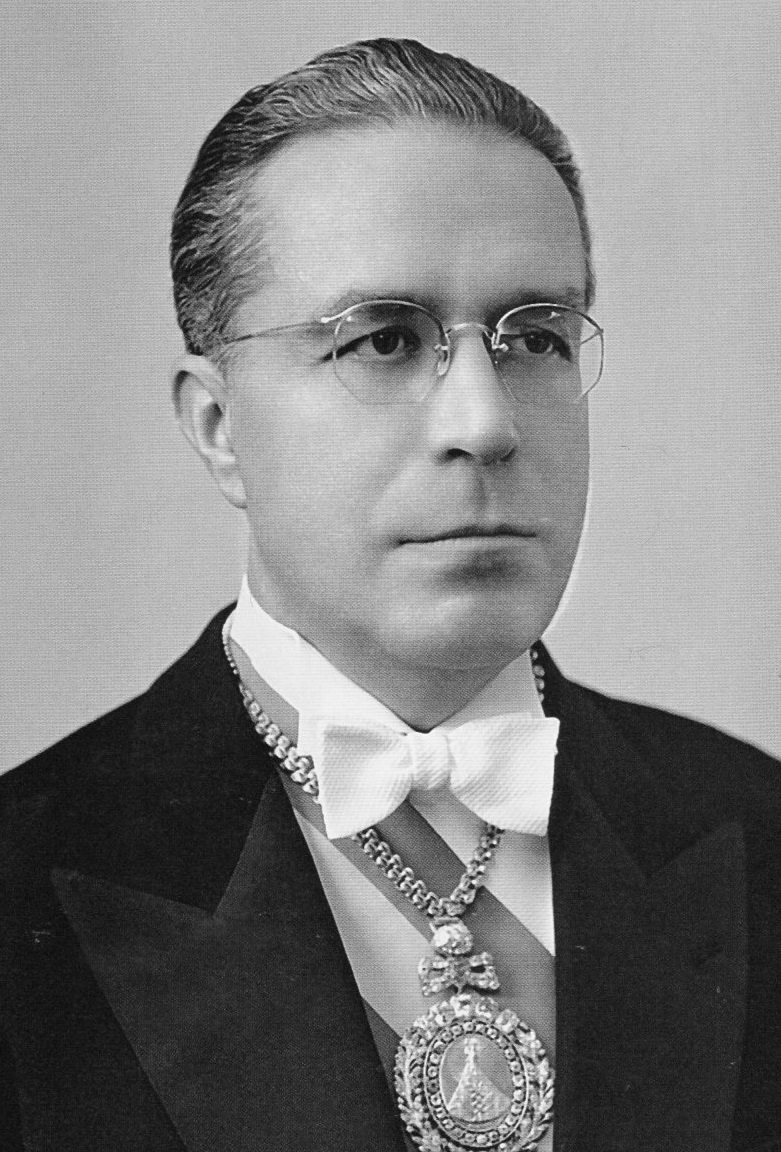
Ángel Víctor Paz Estenssoro
Lawyer, economist, MNR founder, and four-time president of Bolivia
of 100 · stable trend · Visibly decent and improving
Standing
53/100
Raw Score
48/85
Confidence
79%
Evidence
Strong
About
Víctor Paz Estenssoro was the central architect of Bolivia's 1952 National Revolution and later the president who stabilized hyperinflation through harsh neoliberal shock therapy.
The public record is strongly positive on political courage, mass inclusion, and resilience under national crisis, but mixed on integrity and people-centered follow-through because he pursued reelection by constitutional change and later used emergency powers against organized labor.
Five Pillars
Pillar scores (0–100%)
Public evidence shows exceptional impact on political inclusion and strong resilience under national crisis, offset by thin worship evidence, a compromised integrity record around reelection, and harsh treatment of organized labor during austerity.
Goodness over time
Starts at 100 at birth, natural decay after accountability age, timeline events adjust the trajectory.
17 Criteria Scores
Individual item scores (0–5) with evidence notes
Core Worldview
His public life unfolded in a conventionally Catholic national setting and used moral language, but direct personal confession is limited.
He often framed national life in terms of responsibility and judgment rather than pure expediency, though not usually in explicitly theological terms.
The record suggests belief in a larger moral and historical order, but the evidence is indirect.
There is little strong public evidence that scripture-guided language shaped his politics directly.
The accessible record does not document clear prophetic modeling in his public conduct.
Contribution to Others
Public evidence is overwhelmingly national and institutional rather than family-specific.
Educational and social reforms plausibly helped vulnerable young people, but direct targeted evidence is limited.
Universal suffrage, agrarian reform, and mine nationalization were direct attempts to change conditions for excluded and poor Bolivians.
His early reform coalition repeatedly incorporated people previously kept at the margins of citizenship and state concern.
The 1952 program answered long-standing demands from miners, peasants, and indigenous citizens for voice and material change.
The revolution weakened oligarchic control and servile rural structures in concrete ways.
Personal Discipline
The accessible public record offers little direct evidence of disciplined prayer practice.
Social reform is well documented, but disciplined personal religious charity is not.
Reliability
He delivered major reform promises in the 1950s, but the reelection maneuver and later hard ideological turn complicate trust in procedural restraint and consistency.
Stability Under Pressure
He took responsibility in the middle of hyperinflation and did not evade the scale of the crisis.
Exile, overthrow, and repeated returns show unusual personal and political stamina.
He remained effective under conflict, but the emergency response to labor resistance shows pressure-management that was resilient yet morally costly.
Timeline
Key events and documented turning points
Co-founds the Revolutionary Nationalist Movement
Paz Estenssoro helped found the MNR, giving Bolivia a durable nationalist reform party rooted in anti-oligarchic politics.
→ The party became the vehicle for the 1952 revolution and his long public career.
highReturns from exile to lead the National Revolution
After the MNR took power, his government expanded universal suffrage, nationalized the major tin mines, and launched agrarian reform that dismantled older systems of rural domination.
→ The reforms transformed political inclusion in Bolivia and made him the defining reform leader of the era.
highReelection push ends in military overthrow
After changing the constitution to seek another term, Paz Estenssoro was ousted by a military coup led by René Barrientos and Alfredo Ovando.
→ The coup ended MNR rule and cast a long shadow over his democratic credibility.
highLaunches Decree 21060 to stop hyperinflation
Returning to office amid economic collapse, Paz Estenssoro backed the New Economic Policy, floating prices and currency, cutting subsidies, and shrinking the state mining payroll to halt hyperinflation.
→ The program sharply reduced inflation and restored macroeconomic order, but at severe social cost.
highUses a state of siege against striking miners and labor leaders
During the austerity crisis, his government imposed emergency rule, detained labor activists, and used soldiers to break up mobilization by miners resisting layoffs and wage restraints.
→ Government authority held, but the response deepened the human cost of stabilization and damaged his people-centered reputation.
highPressure Tests
Behavior under crisis or scrutiny
Exile before the 1952 revolution
1949Political conflict forced him to organize from abroad while his party prepared for a decisive confrontation at home.
Response: He stayed engaged, returned when called, and converted exile into organized political strategy.
positive1964 reelection crisis and coup
1964His drive for another term fractured support and ended in military overthrow.
Response: He showed resolve, but the underlying choice to stretch the rules counts against integrity under pressure.
mixed_negativeHyperinflation and labor conflict
1985Bolivia faced economic collapse, collapsing wages, and militant resistance from miners and unions.
Response: He acted decisively and successfully stabilized inflation, but paired that resilience with detentions, layoffs, and emergency rule.
mixedProgression
crisis years
The reelection maneuver, the 1964 coup, and the social pain of later austerity exposed the costs of his personalist and highly instrumental style.
mixedcurrent stage
His legacy remains split between social inclusion and economic stabilization on one side, and coercive labor policy and institutional overreach on the other.
stableearly years
Training in law and economics, plus the crisis politics of the Chaco War generation, pushed Paz Estenssoro toward organized nationalist reform.
upgrowth years
The 1952 revolution made him the central figure in Bolivia's mass political incorporation, especially for indigenous, peasant, and working-class citizens.
upBehavioral Patterns
Positive
- • Repeatedly expanded the political community, especially through universal suffrage and agrarian reform.
- • Showed unusual staying power across exile, coups, and economic collapse.
- • Accepted politically costly decisions rather than governing only by comfort or popularity.
Concerns
- • Altered constitutional rules for reelection, feeding a personalist pattern.
- • Later economic stabilization prioritized order over protection for mining communities.
- • Emergency measures against unions undermined the social-care claims of his earlier revolutionary legacy.
Evidence Quality
4
Strong
2
Medium
0
Weak
Overall: strong
This profile measures observable public behavior and documented patterns, not hidden intention or salvation.