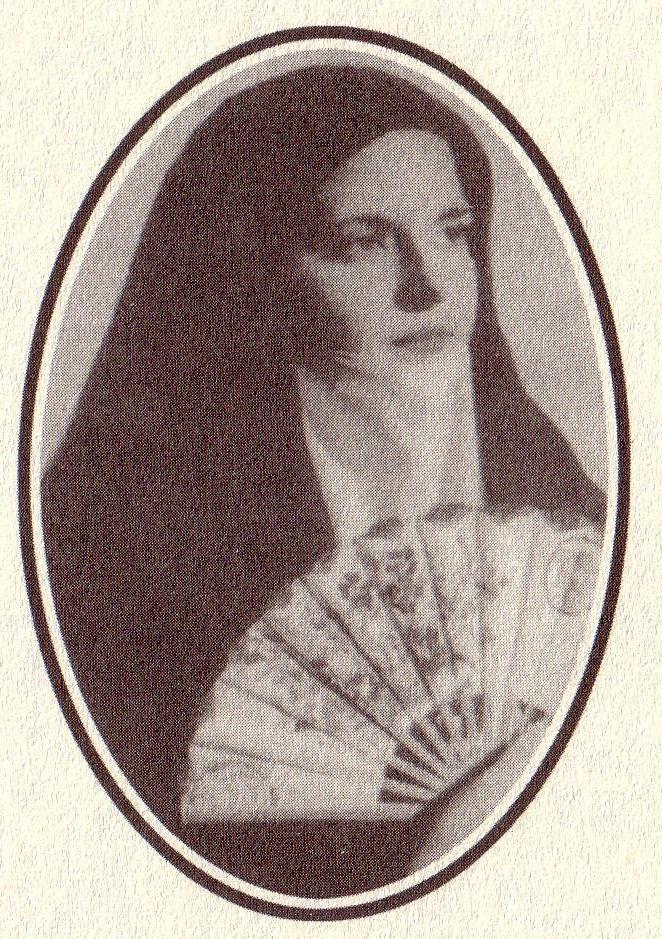
Zaynab Fawwaz
Writer, historian, journalist, novelist, playwright, poet, and women's rights advocate
of 100 · stable trend · Strong moral/spiritual alignment
Standing
80/100
Raw Score
67/85
Confidence
72%
Evidence
Medium-high
About
Zaynab Fawwaz was a Lebanese-born, Egypt-based Muslim writer whose public work in the 1890s-1910s argued for women's education, labor dignity, consent in marriage, and a serious recovery of women's histories.
The strongest observable alignment is in belief-grounded moral reform, intellectual service to women, and courage under restrictive gender norms. Direct evidence of private charity, routine worship, and personal contracts is limited, so those areas carry medium-to-low public observability.
Five Pillars
Pillar scores (0–100%)
Strong alignment is supported by explicit Muslim ethical orientation, sustained feminist public service, and resilience as a self-taught woman in restrictive literary settings; private charity and routine worship remain lower-observability areas.
Goodness over time
Starts at 100 at birth, natural decay after accountability age, timeline events adjust the trajectory.
17 Criteria Scores
Individual item scores (0–5) with evidence notes
Core Worldview
Public record identifies a Muslim ethical worldview and Shi'i background; assumption-of-best applied.
No contrary evidence found; Muslim assumption-of-best applied.
No contrary evidence found; Muslim assumption-of-best applied.
Scholarship describes her feminism as grounded in Islamic ethics.
No contrary evidence found; Muslim assumption-of-best applied.
Contribution to Others
Little direct evidence on family care; early life and marriages are sparsely documented.
Strong advocacy for girls' education and public moral education.
Writing addressed women constrained by education, labor, and marriage norms.
No direct evidence of aid to travelers or displaced people.
No direct record of responding to petitioners; public writing served readers broadly.
Repeated critique of coerced marriage and arguments limiting women's work and education.
Personal Discipline
Clearly Muslim public identity; private worship not contradicted in sources.
Clearly Muslim public identity; no contrary evidence about obligatory charity.
Reliability
Public career shows sustained clarity on reform commitments across genres.
Stability Under Pressure
Likely working-class origin and self-education suggest resilience, but details are limited.
Persisted as a self-taught woman writer under restrictive conditions.
Entered sharp gender debates and maintained public argument under social pressure.
Timeline
Key events and documented turning points
Born in Tibnin region and entered a path of self-education
Accounts place Fawwaz in a working-class family in Tibnin, with uncertainty about her exact birth year; later sources emphasize she was not conventionally well educated and taught herself.
→ Her formation became evidence for resilience against class and gender constraints.
mediumHosted a literary salon in Damascus
After marriage to Adib Nazmi al-Dimashqi, sources report that Fawwaz hosted a literary salon, an unusual public-intellectual role for a veiled woman under the customs of the period.
→ Expanded her participation in literary debate and established a pattern of public intellectual initiative.
mediumPublished reformist articles as Rasa'il Zaynabiyya
Her articles repeatedly addressed gender, education, women's labor, and arguments against claims of female inferiority; she collected them in Rasa'il Zaynabiyya in 1892.
→ Made her commitments visible in the public press and positioned her in reform debates.
highPublished al-Hawa wa al-Wafa, an early Arab woman's play
Fawwaz published al-Hawa wa al-Wafa in 1893; scholarship treats her theatre and fiction as reformist public education and critique of coerced marriage.
→ Used dramatic form to argue that social morality must include consent and justice for women.
mediumCompleted al-Durr al-Manthur, a major biographical dictionary of women
Fawwaz's 552-page compendium presented 453 women across history and geography, adapting Arabic-Islamic biographical tradition through a feminine lens.
→ Created one of the major early Arabic works of feminist historical recovery and public memory.
highSustained a feminism framed through an Islamic ethical worldview
Oxford describes her feminism as based on an Islamic ethical worldview and notes her Shi'i background; NYU records her speaking as a Muslim woman within gender-segregated customs.
→ Linked belief, justice, and social reform rather than treating them as separate projects.
highDied after a public career later recovered by scholars
Fawwaz died in 1914; later scholarship recovered the significance of her work after public awareness diminished.
→ Her legacy now supports broader understanding of women's intellectual history in Ottoman Syria and Egypt.
mediumPressure Tests
Behavior under crisis or scrutiny
Working-class origin and restricted education
1860Sources describe uncertain early life, likely working-class background, and limited formal education.
Response: She pursued learning, entered literary circles, and became a public writer.
positiveGender restrictions in salon and press culture
1880As a veiled woman in late Ottoman social norms, public literary participation required unusual persistence and support.
Response: She hosted a salon and later moved into Cairo journalism and publishing.
positiveDebates over women, marriage, labor, and education
1892Public debates included claims of women's inferiority and restrictions on consent, education, and work.
Response: She wrote directly against those claims through essays, fiction, theatre, and biography.
positiveBehavioral Patterns
Positive
- • Uses writing as service to women and girls rather than self-display alone.
- • Returns repeatedly to education, labor dignity, consent, and resistance to claims of female inferiority.
- • Works within Arabic-Islamic literary traditions while expanding who counts in public memory.
Concerns
- • Sparse evidence for direct material giving to poor, travelers, or petitioners.
- • Biographical uncertainty remains around birth year, early life, and portrait verification.
Evidence Quality
4
Strong
2
Medium
1
Weak
Overall: medium-high
This record assesses public behavior and evidence patterns, not hidden intention, salvation, or private spiritual rank.