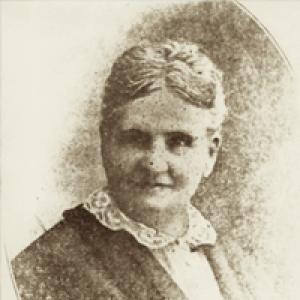
Ana Roqué Géigel de Duprey
Educator, writer, scientist, and suffrage leader
of 100 · stable trend · Visibly decent and improving
Standing
66/100
Raw Score
55/85
Confidence
74%
Evidence
Medium
About
Ana Roqué de Duprey was a Puerto Rican educator, writer, scientist, and suffrage leader. Public sources support a long pattern of expanding education for girls and women, documenting Caribbean botany for public use, and organizing for women's political rights.
The strongest evidence is in social care through education, civic publishing, science accessibility, and women's rights work. The main caution is her alignment with literate-only suffrage in the 1920s, which limited the reach of a movement that otherwise expanded rights.
Five Pillars
Pillar scores (0–100%)
A durable education-and-rights record with strong resilience and integrity signals, moderated by limited devotional evidence and a serious class-limited suffrage caution.
Goodness over time
Starts at 100 at birth, natural decay after accountability age, timeline events adjust the trajectory.
17 Criteria Scores
Individual item scores (0–5) with evidence notes
Reliability
Long-term institution-building and sustained publication work support reliability and commitment-follow-through.
Personal Discipline
Historical sources do not document routine prayer; score reflects cautious positive religious context.
Public service and educational support are strong; specifically disciplined religious charity is not directly evidenced.
Core Worldview
Public religious language and Catholic-context biography support theistic orientation, but private belief cannot be directly verified.
Moral-duty language is present; explicit accountability doctrine is not well documented.
Religious framing and astronomy/science work suggest ordered creation, with limited direct evidence.
Likely Christian cultural-religious grounding, but direct scripture-guided practice is thin.
No strong direct evidence found beyond general Christian context.
Contribution to Others
Balanced family responsibilities after widowhood while sustaining public education work.
Girls' schools, teacher training, and education work directly supported young people with fewer opportunities.
Educational access, scholarships through La Mujer, and practical botany notes supported broader public benefit.
Little direct evidence for travelers or strangers specifically; broader public education signal exists.
Teacher preparation and public educational work show repeated responsiveness, though individual cases are sparse.
Educated enslaved people as a marriage condition and led suffrage organizing for women's political rights.
Stability Under Pressure
CPI reports nearly 30 years of botanical work amid economic adversity.
Continued public work after early maternal loss, widowhood, and surviving children's losses.
Persisted under gender exclusion in science and public political conflict over suffrage.
Timeline
Key events and documented turning points
Opened a school as a teenager
At about age 13, Roqué opened a school from her home and wrote a geography textbook that later became a local school reference.
→ Early pattern of turning learning into public education.
mediumMade education for enslaved people a marriage condition
When marrying landowner Luis Duprey, sources report she required permission to educate enslaved people and objected to forced bowing.
→ A concrete anti-dehumanization condition before abolition in Puerto Rico.
highFounded La Mujer
Roqué founded La Mujer, described as the first publication in Puerto Rico designed specifically for women, and used publishing to support women's public participation.
→ Created a women-centered civic platform.
highBuilt teacher and girls' education institutions
By 1902 she had established a teacher's academy, Liceo Ponceño, and the College of Mayagüez, connected by sources to the later University of Puerto Rico system.
→ Expanded formal educational paths for women and students.
highCompiled Botánica Antillana
Over years of work, Roqué documented thousands of Caribbean plants with accessible notes and illustrations; the work was later recovered after being overlooked.
→ Public-interest science work persisted despite exclusion and non-publication.
highFounded Puerto Rico's first women's suffrage organization
After the Jones Act enfranchised adult men but not women, Roqué and collaborators founded Liga Femínea Puertorriqueña.
→ Advanced organized pressure for women's political rights.
highBacked literate-only suffrage strategy
After movement disagreements, Roqué and other elite suffragists formed an association that favored enfranchising literate women, while others argued for universal adult women's suffrage.
→ The strategy helped produce partial suffrage in 1929 but left universal suffrage until 1935.
highPressure Tests
Behavior under crisis or scrutiny
Widowhood with young children
1880Her husband died after the family moved to San Juan, leaving her with children to support.
Response: She continued teaching, studying, writing, and institution-building.
strong resilienceScientific exclusion and economic adversity
1910Her Botánica Antillana work was prepared over decades but remained unpublished and undervalued by male-dominated scientific institutions.
Response: She continued documenting Caribbean flora in accessible language despite the lack of recognition.
strong resilienceSuffrage movement split
1924Puerto Rican suffragists divided over literacy restrictions and universal suffrage.
Response: She helped form a group favoring literate women's suffrage, advancing partial rights while excluding poorer and less educated women.
mixed integrity and social-care signalProgression
crisis years
Her suffrage leadership widened women's political power but reflected elite restrictions on who should vote first.
mixedearly years
From childhood and adolescence, learning quickly became teaching and public service.
improvinggrowth years
She expanded from classrooms into newspapers, schools, teacher preparation, and scientific work.
improvingBehavioral Patterns
Positive
- • Education as service: opened schools, trained teachers, and taught across several Puerto Rican towns.
- • Used writing and publishing to give women a public civic forum.
Concerns
- • Rights advocacy was constrained by class and literacy assumptions in the 1920s suffrage split.
Evidence Quality
4
Strong
3
Medium
1
Weak
Overall: medium
This profile evaluates observable public behavior and evidence patterns, not hidden intention, soul-state, or salvation.