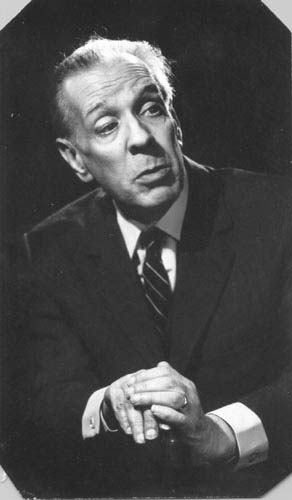
Jorge Francisco Isidoro Luis Borges Acevedo
Argentine writer, essayist, poet, translator, and former director of the National Library of Argentina
of 100 · improving trend · Some good traits but inconsistent
Standing
33/100
Raw Score
28/85
Confidence
68%
Evidence
Medium
About
Borges is one of the most influential writers of the twentieth century, with a public record marked by cultural brilliance, personal endurance, and serious political misjudgment.
The strongest observable positives are resilience under blindness and illness, resistance to some forms of authoritarianism, and late solidarity with families of the disappeared. The strongest negatives are explicit agnosticism within this framework, very limited evidence of repeated material care for vulnerable people, and his 1976 praise for Videla and Pinochet before later reversing course.
Five Pillars
Pillar scores (0–100%)
Borges rates as a mixed record in this framework: unusually strong in resilience and late moral correction, but held down by explicit agnosticism, thin evidence of direct social care, and a documented willingness to praise dictators before later pulling back.
Goodness over time
Starts at 100 at birth, natural decay after accountability age, timeline events adjust the trajectory.
17 Criteria Scores
Individual item scores (0–5) with evidence notes
Core Worldview
Repeatedly described himself as agnostic while still speaking of possible meaning beyond the self.
He kept an open mind about the afterlife but denied certainty and formal commitment.
He often spoke as if some mysterious order or purpose might exist.
He treated scripture seriously as text but not as a binding guide for his life.
No strong public evidence shows prophetic models shaping his conduct.
Contribution to Others
Public evidence on family obligation is thin beyond his long dependence on and attachment to his mother.
No reliable public pattern of direct service to unsupported young people was found.
His public record is culturally influential but offers little proof of repeated material help to the poor.
His later solidarity with the disappeared shows some meaningful concern for vulnerable strangers.
He responded after hearing directly from mothers of the disappeared, but the record is limited.
Some anti-authoritarian writing and later criticism of repression support a modest score here.
Personal Discipline
Borges explicitly said he had no religion and there is no public evidence of sustained prayer practice.
No clear record of disciplined obligatory giving was found.
Reliability
He showed some principled consistency, but the dictatorship praise and delayed correction keep trustworthiness mixed.
Stability Under Pressure
Evidence is limited, but he endured modest working years without the record showing collapse or opportunism.
Blindness, illness, and dependence did not stop his disciplined work.
He endured political pressure and later faced a military critic despite being frightened.
Timeline
Key events and documented turning points
Survived a near-fatal head injury and began writing the fiction that made his name
After a Christmas Eve accident and septicemia, Borges nearly died, feared for his sanity, and then shifted more decisively into fiction while his eyesight continued to worsen.
→ Personal hardship became a turning point in discipline and endurance rather than public withdrawal.
mediumPaid a career price after signing anti-Peronist statements and resigned his municipal library post
Public opposition to Peronism led to administrative punishment and the notorious poultry-and-rabbits reassignment story; Borges resigned rather than normalize the humiliation.
→ Strengthened his public image as a writer willing to bear institutional cost for a political stance, even if later retellings blurred details.
mediumBecame director of the National Library as blindness overtook him
After Peron fell, Borges was appointed director of the National Library of Argentina and soon depended on others to read and write as total blindness set in.
→ His stature and institutional influence expanded even as physical limitation deepened.
mediumPublicly lent prestige to military rulers by praising Videla and Pinochet as defenders of liberty
Borges initially welcomed the Argentine junta, joined a lunch with Videla, and after meeting Pinochet described him as a gentleman and the military as protectors of freedom.
→ This became the sharpest integrity failure in his record and a lasting reason many readers saw him as politically compromised.
highSigned a public manifesto backing families of the disappeared after meeting Mothers of Plaza de Mayo
After two mothers visited him and described the disappearances, Borges signed a Clarin manifesto demanding publication of the names and whereabouts of those taken for political reasons.
→ Marked a meaningful public correction from passivity and earlier junta sympathy toward solidarity with victims.
highPublicly admitted democratic error after Argentina's return to elections
In a Clarin text after Raul Alfonsin's victory, Borges wrote that Argentine democracy had splendidly refuted his earlier contempt for it.
→ Provided rare explicit self-correction from a writer often accused of political stubbornness.
mediumPressure Tests
Behavior under crisis or scrutiny
1938 septicemia and advancing blindness
1938A near-fatal accident, infection, and worsening hereditary blindness threatened his identity as a writer.
Response: He adapted by dictating, relying on memory, and continuing to work.
positive1946 punishment after anti-Peron statements
1946Political pressure hit his municipal employment and public standing.
Response: He resigned rather than quietly accept the degrading reassignment story that followed.
mixed_positive1980 confrontation after supporting the disappeared
1980A military officer publicly confronted him over his criticism of the regime.
Response: He stood his ground despite fear, then admitted afterward that he had been frightened.
positiveProgression
crisis years
Political judgment failed badly when military rulers converted his anti-Peronism into usable prestige.
mixedcurrent stage
His final public phase moved toward correction, democratic humility, and solidarity with victims, but too late to erase the earlier harm.
correctiveearly years
A precocious literary life rooted in books, language, and abstraction rather than organized public service.
forminggrowth years
Cultural influence widened through fiction, criticism, and institutional literary roles even as blindness advanced.
upwardBehavioral Patterns
Positive
- • Long-run discipline despite blindness and physical fragility.
- • Repeated public willingness to oppose some authoritarian currents, especially Peronism and later military repression.
- • Rare late-life openness to self-correction in print.
Concerns
- • Thin public proof of repeated hands-on care for poor or vulnerable groups.
- • A tendency to abstract politics into symbols, which left him badly exposed to authoritarian misuse.
- • Public praise for dictators created a real moral stain that later corrections do not erase.
Evidence Quality
5
Strong
3
Medium
1
Weak
Overall: medium
This profile evaluates observable public behavior and evidence, not the state of a person's soul.