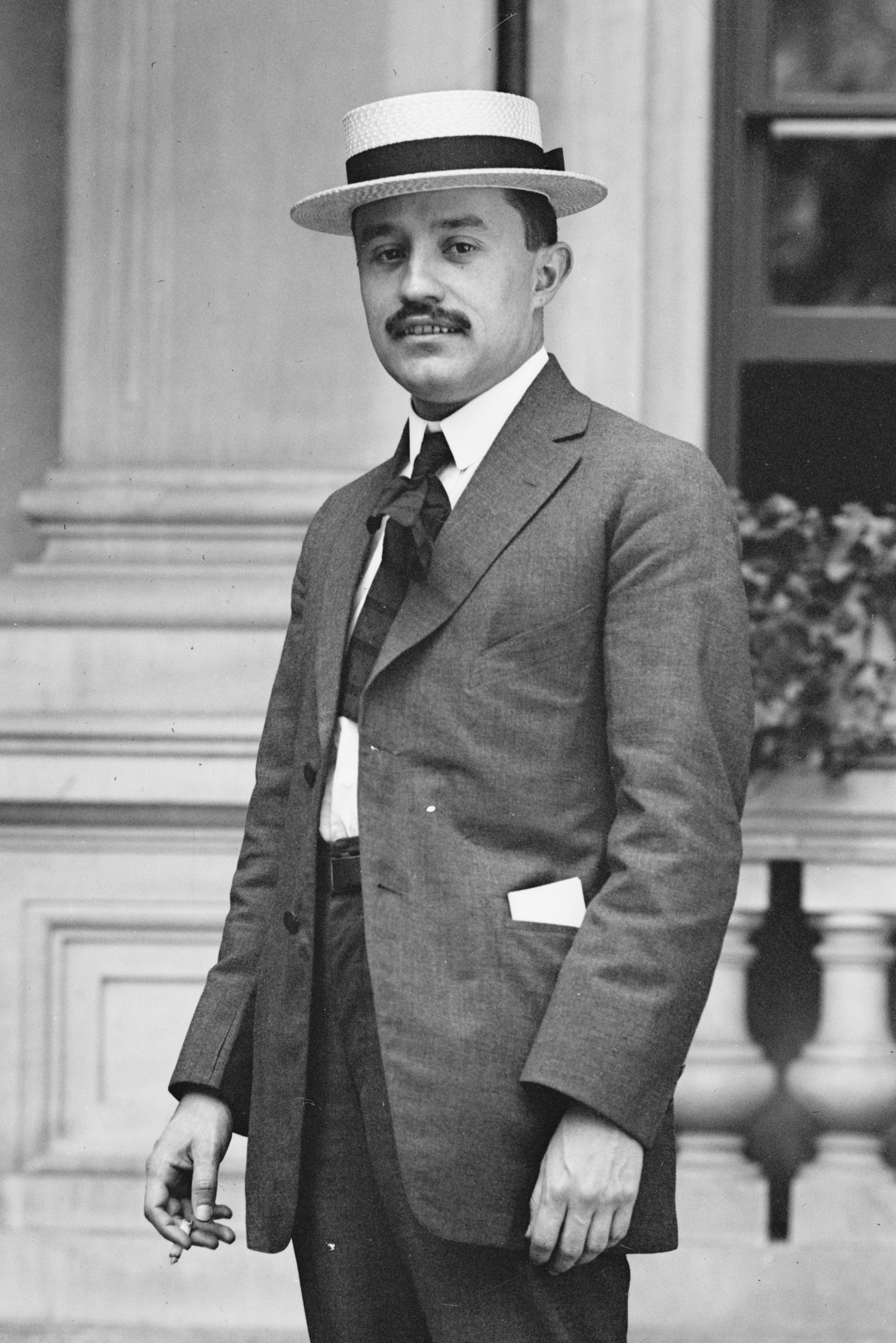
José Vasconcelos Calderón
Mexican educator, philosopher, writer, politician, and first secretary of public education
of 100 · stable trend · Some good traits but inconsistent
Standing
51/100
Raw Score
45/85
Confidence
78%
Evidence
Strong
About
José Vasconcelos helped build modern Mexican public education through rural schools, literacy work, libraries, mass publishing, and support for the muralist movement. The main caution is that his later public record includes assimilationist racial theory and clear Timón-era sympathy for national socialism and antisemitic propaganda.
The observable record is materially constructive at scale in education and culture, but not clean. He repeatedly used public office for broad civic uplift, yet later pressure and ideology exposed serious integrity failures that keep the profile in a mixed band rather than an exemplary one.
Five Pillars
Pillar scores (0–100%)
Vasconcelos scores above failure because he repeatedly translated public power into schools, books, libraries, and cultural access. He remains capped in the mixed middle band because the same public record also contains authoritarian, assimilationist, and antisemitic turns that damage integrity and pressure-test judgment.
Goodness over time
Starts at 100 at birth, natural decay after accountability age, timeline events adjust the trajectory.
17 Criteria Scores
Individual item scores (0–5) with evidence notes
Core Worldview
Public philosophy and later Catholic self-presentation show real theistic orientation, though not enough direct devotional evidence for a top score.
His rhetoric often treated history and culture as morally charged rather than morally neutral.
The public philosophy of aesthetic and civilizational unity suggests real metaphysical conviction.
There is real religious language in the record, but not enough disciplined scriptural grounding to score this strongly.
The visible record is shaped more by philosophy and nationalism than by clearly modeled prophetic imitation.
Contribution to Others
Public material centers on national projects rather than kin-directed care.
Expanded schooling and youth access plausibly helped unsupported children, though not through a specialized orphan-care record.
The strongest constructive pattern is direct state effort to reach poor and rural populations with education and books.
His programs were designed for people cut off from formal education, especially in the countryside.
The record supports broad responsiveness to social need, though less one-to-one evidence of personal response.
He treated illiteracy and cultural exclusion as forms of constraint and built institutions against them.
Personal Discipline
Public evidence of disciplined devotional practice is limited even though later Catholic identity is visible.
The record shows public service through office more clearly than sacrificial personal charity as a discipline.
Reliability
He delivered on education-building commitments, but the Timón episode and later ideological conduct are major trust injuries.
Stability Under Pressure
Repeated exile and unstable public standing suggest endurance, though direct financial evidence is thin.
He kept writing, lecturing, and re-entering public argument through long setbacks and exile.
The late move toward Timón-era propaganda suggests degraded judgment under ideological pressure.
Timeline
Key events and documented turning points
Rectoral literacy campaign and university-for-the-people agenda
As rector of the National University of Mexico, Vasconcelos framed the university as responsible to the people and launched a mass literacy campaign with honorary teachers.
→ Set the public pattern that education should serve mass emancipation rather than only elite formation.
highBuilt a national education push through the new ministry
As first secretary of public education, he drove rural schooling, cultural missions, large-scale textbook and primer production, and a national library network.
→ Created one of the foundational expansions of modern Mexican public education.
very_highBacked muralism and public culture inside state institutions
Vasconcelos offered public walls and ministry space to major artists, helping make muralism and civic art part of everyday state culture.
→ Expanded cultural access and helped shape a durable visual language of post-revolutionary Mexico.
highLa raza cósmica amplified a mixed but assimilationist national vision
His writing on the cosmic race opposed simple racial-purity narratives but also pushed a homogenizing mestizo national project that critics say submerged Indigenous distinctiveness.
→ Left an influential but morally mixed intellectual legacy.
highFailed presidential run ended in renewed exile
He ran unsuccessfully for the presidency in 1929 and then spent another long period in exile after the campaign collapsed.
→ Showed endurance and anti-regime resolve, but also marked the start of a more embittered public phase.
highDirected Timón and aligned publicly with Nazi discourse
In 1940 he directed Timón, a magazine described by scholarship as openly supportive of national socialism and visibly antisemitic.
→ This is the clearest integrity collapse in the accessible public record.
very_highPressure Tests
Behavior under crisis or scrutiny
Post-revolution exile periods
1915Political conflict repeatedly pushed Vasconcelos into exile before and after his cabinet years.
Response: He continued writing and re-entered public life rather than disappearing, which supports a real resilience signal.
positive1929 presidential defeat and exile
1929After an unsuccessful presidential bid that he considered fraudulent, he again left Mexico.
Response: The response showed endurance and refusal to accept the regime quietly, but it also intensified a later pattern of embittered politics.
mixedTimón under World War II pressure
1940In a globally polarized moment, he directed a magazine that publicly aligned with Nazi discourse.
Response: Instead of showing moral steadiness under pressure, he moved toward harmful ideological rhetoric.
negativeProgression
crisis years
After 1929, the record becomes more bitter and ideologically dangerous, culminating in the Timón stain.
downcurrent stage
His legacy remains nationally important but morally contested because later extremism complicates earlier public good.
flatearly years
His early public path moved from elite legal-intellectual life toward mass education as civic duty.
upgrowth years
Public office turned his ideas into a national education and culture project with unusual institutional reach.
upBehavioral Patterns
Positive
- • He repeatedly treated education as service to people beyond elite circles.
- • He used institutional power to broaden access to books, schools, teachers, and public art.
- • Even critical scholarship still recognizes the scale of his early educational impact.
Concerns
- • His race writing often folded Indigenous people into an assimilationist national project.
- • The Timón period shows overt alignment with antisemitic and Nazi-inflected rhetoric.
- • No strong public evidence shows a late moral correction of that collapse.
Evidence Quality
8
Strong
4
Medium
0
Weak
Overall: strong
This profile evaluates observable public behavior and evidence, not the state of a person's soul.