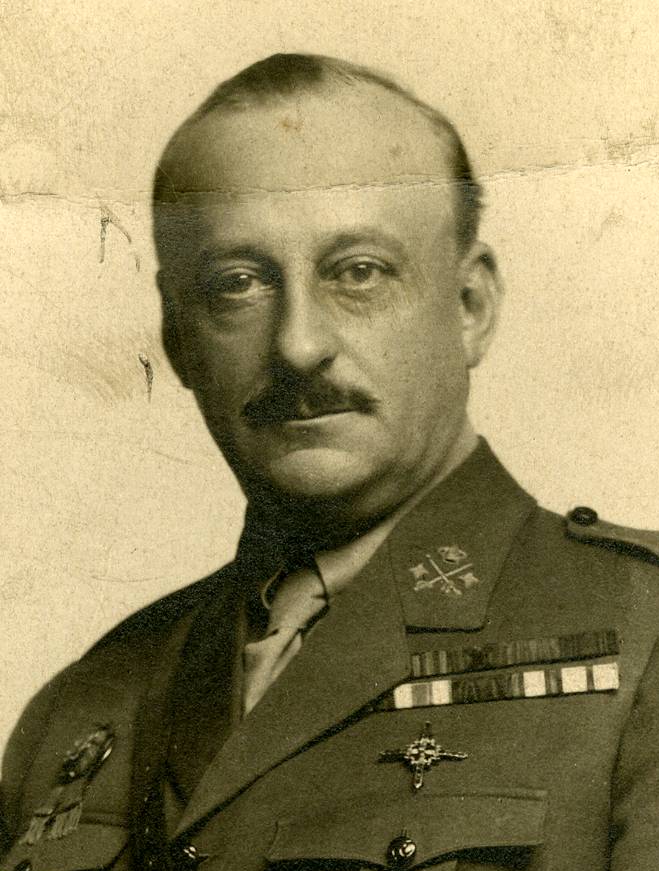
Miguel Primo de Rivera y Orbaneja
Spanish general, prime minister, and military dictator of Spain from 1923 to 1930
of 100 · stable trend · Some good traits but inconsistent
Standing
34/100
Raw Score
31/85
Confidence
76%
Evidence
Strong
About
Primo de Rivera combined real state-building delivery, especially public works and the end of the Moroccan War, with a decisive destruction of parliamentary life and civil liberties.
Under this framework his record remains mixed-to-negative. Observable administrative gains are real, but integrity is badly damaged by the coup, censorship, anti-Catalan repression, and the failure to return Spain to trustworthy constitutional rule.
Five Pillars
Pillar scores (0–100%)
The record shows real state capacity and some public-benefit delivery, but the profile stays low because coercive rule, broken constitutional trust, and thin evidence of personal devotion or broad people-centered care outweigh the regime's practical gains.
Goodness over time
Starts at 100 at birth, natural decay after accountability age, timeline events adjust the trajectory.
17 Criteria Scores
Individual item scores (0–5) with evidence notes
Core Worldview
Public stance was tied to religion and monarchy, but observable personal devotion is limited.
Public record shows moral-order language more than clear personal accountability teaching.
Some religious-national framing is visible, but evidence is indirect.
Conservative Catholic language around religion is public, though partly political.
Not much direct public evidence beyond traditional Catholic framing.
Contribution to Others
Public evidence about family-directed care is minimal.
No strong repeated public record centered on unsupported young people.
Public works and labor mediation offered some material benefit.
Little direct evidence of stranger-centered care.
He responded to unrest and labor demands selectively through state mediation.
His regime removed liberties rather than freeing people from constraint.
Personal Discipline
Private worship practice is not well documented in the public record.
No strong public evidence of disciplined personal charity.
Reliability
He promised a brief corrective rule but prolonged dictatorship and broke constitutional trust.
Stability Under Pressure
He endured decline but the regime handled economic strain poorly.
He remained active through illness and collapse until exile.
He was durable under conflict, but his methods were coercive rather than morally steady.
Timeline
Key events and documented turning points
Issued the coup manifesto promising a short corrective dictatorship
Primo de Rivera presented the military takeover as a temporary rescue of Spain, promising order, discipline, and responsible government after a rapid intervention.
→ Created an initial expectation of temporary rule while concentrating power in military hands.
highSuspended constitutional guarantees and dissolved parliament
Once in power, Primo de Rivera dissolved the Cortes, imposed censorship, and governed through martial-law methods rather than constitutional repair.
→ Order was imposed quickly, but representative politics and civil liberties were sharply curtailed.
highTurned against Catalan autonomy after initially receiving support there
After the coup was welcomed in Catalonia, Primo de Rivera permitted an anti-Catalan campaign that restricted regional liberties and symbols.
→ Regional dissent deepened and one of his early bases of goodwill was damaged.
mediumBacked the Alhucemas landing that helped end the Moroccan War
Working with France, the regime supported the Alhucemas operation and the later defeat of Abd el-Krim, bringing Spain's long Moroccan conflict to a close by 1927.
→ Delivered one of the regime's clearest practical successes and boosted Primo de Rivera's standing.
highExpanded public works and labor mediation during the regime's strongest years
The dictatorship invested in infrastructure and mediated some labor disputes, creating jobs and short-term social calm while presenting itself as practical rather than ideological rule.
→ Produced visible material benefits, though without deeper democratic or agrarian reform.
mediumTried and failed to legitimize the dictatorship through a nonelective National Assembly
Primo de Rivera convened an advisory National Assembly and pursued a corporatist constitutional alternative, but the project won little durable legitimacy.
→ Showed that the regime could govern coercively but could not build a convincing constitutional replacement.
highResigned after losing the support of the army and the king
As the peseta weakened and opposition spread, Primo de Rivera found little backing among the captain generals, resigned, and went into exile in Paris, where he died weeks later.
→ Ended the dictatorship without a final military showdown, but left the monarchy politically discredited.
highPressure Tests
Behavior under crisis or scrutiny
National political and military crisis
1923Spain's parliamentary system was under strain after unrest and the Morocco disaster.
Response: Primo de Rivera chose a military seizure of power rather than a constitutional route.
negativeEconomic downturn and collapsing support
1929The peseta weakened, deficits mounted, and both civilian and military backing eroded.
Response: He canvassed the army, found little support, and resigned rather than launch a last coercive struggle.
mixedExile and severe illness
1930After resigning he left for Paris while suffering from diabetes and died weeks later.
Response: His end shows personal endurance under decline, but not a broader moral recovery of the regime's record.
mixedProgression
crisis years
Economic deterioration and lost institutional support exposed the regime's shallow legitimacy and inability to build a durable constitutional replacement.
decliningcurrent stage
The settled historical legacy is mixed: practical gains remain visible, but authoritarian harm dominates the moral reading.
mixed_legacyearly years
A military career in Morocco, Cuba, and the Philippines formed a crisis-first view of politics and order.
forminggrowth years
The 1923 coup and the regime's strongest years fused military prestige, anti-parliamentary frustration, war-ending delivery, and public works into authoritarian rule.
mixed_positiveBehavioral Patterns
Positive
- • Converted military prestige into short-term state capacity, public works, and labor mediation.
- • Made ending the Moroccan War a central practical objective and achieved it with French cooperation.
Concerns
- • Repeatedly treated censorship and suspended liberties as acceptable tools of political repair.
- • Promised temporary corrective rule but extended dictatorship without restoring trustworthy representative government.
Evidence Quality
6
Strong
2
Medium
0
Weak
Overall: strong
This profile evaluates observable public behavior and evidence, not the state of a person's soul.