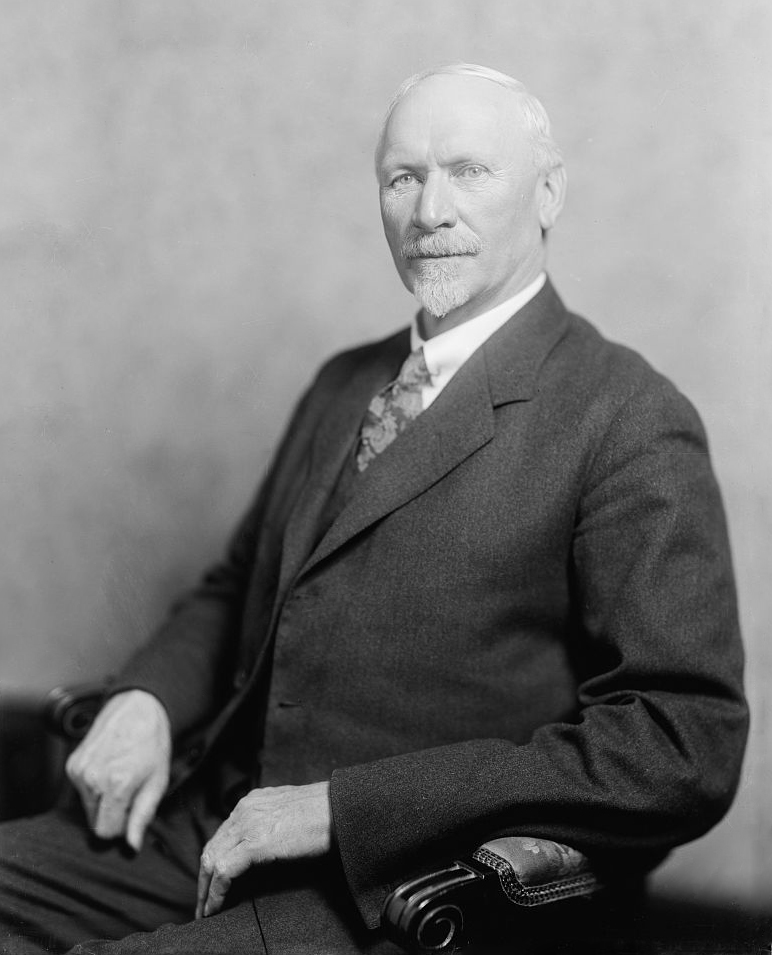
Jan Christiaan Smuts
South African prime minister, Boer general, imperial statesman, and political theorist
of 100 · stable trend · Some good traits but inconsistent
Standing
47/100
Raw Score
41/85
Confidence
86%
Evidence
Strong
About
Smuts helped design major international institutions and led South Africa into the Allied war effort, but he also defended white political dominance and presided over violent crackdowns on Black South Africans and white workers.
The observable record is sharply mixed. He repeatedly showed stamina, administrative ability, and real imagination in international politics, yet the same public record includes exclusionary race doctrine, coercive state violence, and only limited late movement away from total segregation.
Five Pillars
Pillar scores (0–100%)
Smuts scores highest for resilience under military and political pressure and for his role in world-order building. The score stays mixed because the public record also shows segregationist convictions, Black political exclusion, and deadly coercion by the state under his leadership.
Goodness over time
Starts at 100 at birth, natural decay after accountability age, timeline events adjust the trajectory.
17 Criteria Scores
Individual item scores (0–5) with evidence notes
Core Worldview
Strict Calvinist upbringing and later public moral language support a real theistic baseline, though mature public evidence is more philosophical than devotional.
He spoke of moral duty and civilization more than explicit final-accountability language.
His holism and repeated appeals to ordered human destiny indicate strong confidence in a moral structure beyond raw power.
Christian formation is clear, but his public record does not show sustained scripture-shaped language in political action.
Some religious inheritance is visible, but public modeling is not strongly framed around prophetic imitation.
Contribution to Others
The accessible public record is centered on politics and war rather than family care.
No strong repeated pattern was found in public sources.
His rhetoric and some late reformism point toward limited concern, but the domestic record does not show strong repeated help to the poor as a class.
International institution-building and occasional negotiated concessions help here, but only modestly.
He sometimes negotiated with critics and later recognized urban grievances, but the pattern is inconsistent.
His global rights language matters, yet at home he upheld a racially constrained order.
Personal Discipline
Christian background is clear, but direct evidence of steady devotional practice is thin.
No strong public record of disciplined religious giving was found.
Reliability
He was a serious constitutional actor, but racial exclusion and harsh coercive choices make trustworthiness deeply uneven across affected groups.
Stability Under Pressure
He showed long-run endurance through war and political reversals, even if personal-finance evidence is limited.
He remained active through defeat, opposition years, and exhausting wartime burdens.
His record under military and political pressure is one of the clearest strengths in the file.
Timeline
Key events and documented turning points
Helped draft the Union of South Africa constitution
Smuts was a principal architect of the Union settlement, but the state he helped build centered white reconciliation and kept Black South Africans outside meaningful national political power.
→ Created a durable state structure while hardening racial exclusion at the constitutional level.
highHelped shape the League of Nations and rose to the premiership
Smuts presented a League plan in late 1918, helped shape the Covenant at Paris in 1919, and became prime minister after Louis Botha's death that year.
→ Greatly expanded his global influence and reputation as an international statesman.
highBulhoek killings scarred his first premiership
After failed negotiations, government forces used overwhelming firepower against the Israelites at Bulhoek, killing about 200 people in an episode tied directly to Smuts' government.
→ Became one of the clearest moral stains on his domestic record.
highCrushed the Rand Rebellion with military force
Smuts imposed martial law, used aircraft and artillery, and was widely criticized for the severe suppression of the Rand revolt.
→ Restored order but deepened his reputation for coercive state handling of domestic crisis.
highTook South Africa into World War II on the Allied side
After Hertzog failed to secure neutrality, Smuts formed a new cabinet and committed South Africa to war against Germany, later serving the Allied cause as a field marshal and senior adviser.
→ Showed high steadiness under existential pressure and raised his global standing.
highArgued for a rights-centered UN Charter at San Francisco
As head of the South African delegation, Smuts urged that the Charter be more than a war-prevention pact and pressed language about human rights and common faith into the founding moment of the UN.
→ Strengthened his reputation as a builder of international order while sharpening the contradiction between universal language and racial exclusion at home.
highBacked the Fagan Commission against total apartheid
Responding to wartime pressures and Black urbanization, Smuts backed a commission that rejected total apartheid as impractical, though it still worked inside a segregationist framework.
→ Marked a partial late moderation without undoing the deeper racial order he had long defended.
mediumPressure Tests
Behavior under crisis or scrutiny
Bulhoek crisis
1921A prolonged land-and-authority conflict with the Israelites ended in a massacre by government forces.
Response: Smuts' government escalated to overwhelming force after negotiations failed, leaving a serious moral stain.
negativeWorld War II leadership
1939South Africa faced a defining split over neutrality versus entering the war on the Allied side.
Response: Smuts took responsibility, formed a new cabinet, and maintained Allied alignment through a high-pressure war period.
positiveLate race-policy pressure
1946Wartime change and Black urbanization made total segregation harder to sustain politically and administratively.
Response: He backed the Fagan line against total apartheid, but only as a partial moderation inside segregation.
mixedProgression
crisis years
Domestic crises exposed a hard coercive edge and fixed the darkest parts of his local legacy.
downcurrent stage
His posthumous standing remains permanently split between world-order achievement and racial injustice.
mixedearly years
A brilliant legal and military rise turned quickly into state-building, but the political frame was already racially restricted.
mixedgrowth years
His international stature grew dramatically as he connected South African power to imperial and global institutions.
upBehavioral Patterns
Positive
- • Repeatedly chose high-responsibility roles in war and constitutional crisis rather than political retreat.
- • Turned ideas about world order into real institutions, not just speeches.
Concerns
- • Placed white reconciliation and imperial order above equal civic dignity for Black South Africans.
- • Responded to domestic crises with lethal coercion more readily than moral restraint.
- • Public evidence of devotional life and personal charity is too thin to support strong worship scores.
Evidence Quality
6
Strong
2
Medium
0
Weak
Overall: strong
This profile evaluates observable public behavior and evidence, not the state of a person's soul.