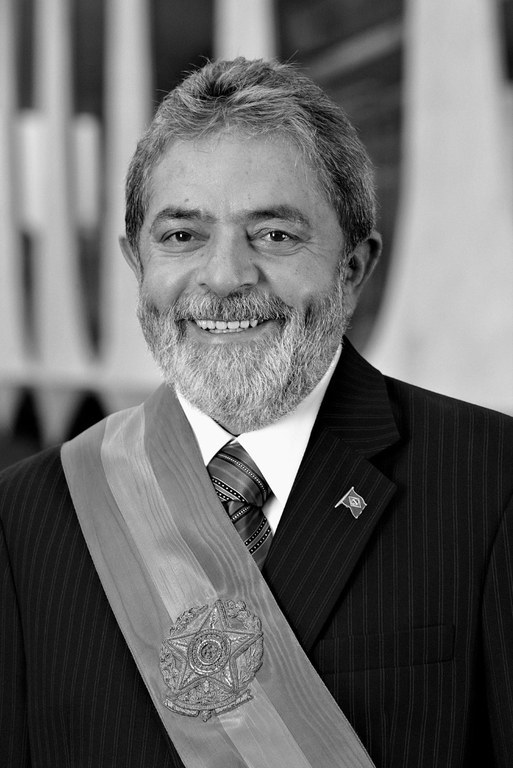
Luiz Inácio Lula da Silva
President of Brazil, politician, former trade union leader
of 100 · improving trend · Visibly decent and improving
Standing
70/100
Raw Score
62/85
Confidence
68%
Evidence
Strong but contested
About
Brazil's president built a durable public identity around labor rights, poverty reduction and democratic recovery, but his integrity profile remains constrained by enduring corruption-era controversy.
Observable conduct shows strong social-care and resilience patterns across decades, with medium confidence because his public record is large, polarized and partly contested.
Five Pillars
Pillar scores (0–100%)
Strongest in social care and resilience; belief and worship show meaningful but less directly evidenced public practice; integrity remains the limiting category.
Goodness over time
Starts at 100 at birth, natural decay after accountability age, timeline events adjust the trajectory.
17 Criteria Scores
Individual item scores (0–5) with evidence notes
Reliability
His long commitment to poverty reduction is real, but scandal-era governance and corruption allegations significantly weaken trust signals.
Personal Discipline
Faith is visible in public language, but direct documentation of consistent devotional routine is limited.
Long-standing, disciplined support for anti-poverty redistribution functions as serious public charity-oriented practice.
Core Worldview
Public rhetoric about God and papal engagement support a clearly theistic public posture.
He often frames politics in moral-accountability terms, though explicit last-day language is limited.
Faith language is real but usually secondary to social and democratic themes.
Public record suggests Catholic orientation without much direct scripture-grounded policy language.
Limited direct public evidence of prophetic modeling in his own words.
Contribution to Others
Public record suggests concern for family-rooted poverty experience, though direct evidence is limited.
Bolsa Família and child-focused supplements materially support vulnerable children and school attendance.
Anti-hunger and cash-transfer policies are central, repeated and high-impact.
Broad welfare and democratic inclusion agendas help socially cut-off groups, though direct migrant-specific evidence is thinner.
Participatory welfare and repeated public attention to hunger complaints show responsiveness to need voiced from below.
Union leadership and redistributive policy both aimed at reducing structural material constraint.
Stability Under Pressure
Early-life hunger, migration and work hardship were met with long-range persistence.
He endured prison, bereavement and repeated defeat without exiting public life.
He remains durable under intense electoral, judicial and diplomatic pressure, though sometimes confrontational in tone.
Timeline
Key events and documented turning points
Elected president of the ABC metalworkers' union
Lula became president of the São Bernardo do Campo and Diadema metalworkers' union, moving from shop-floor work into nationally visible labor leadership.
→ Built a durable public identity around labor representation and class advocacy.
highWins the presidency for the first time
After several earlier defeats, Lula won the presidency with almost 53 million votes.
→ Opened the way for national-scale anti-poverty and labor-centered policy delivery.
globalLaunches Bolsa Família framework
His administration created Bolsa Família as a conditional cash-transfer program aimed at hunger reduction, school attendance and health compliance.
→ Established one of Brazil's signature anti-poverty systems and a central pillar of Lula's social-care reputation.
globalWorld Bank backs second phase of Bolsa Família
The World Bank described Bolsa Família as having matured into a major poverty-reduction and social-protection program after seven years.
→ Provided external validation that the program had durable social impact beyond short-term political messaging.
highSurrenders to begin prison sentence in Car Wash case
Lula turned himself in after corruption and money-laundering convictions, removing the then-front-runner from that year's presidential race.
→ Created the deepest integrity crisis in his public life and intensified national division around his legacy.
globalSupreme Court recognizes Moro's bias and overturns conviction
Brazil's Supreme Court recognized Sergio Moro's partiality in the triplex case and quashed the conviction.
→ Restored Lula's legal standing and strengthened his argument that the prosecution had been politically compromised.
globalRelaunches Bolsa Família in third presidency
Soon after returning to office, Lula restored Bolsa Família with renewed conditions and child-centered supplements.
→ Reaffirmed that hunger and poverty reduction remained central rather than rhetorical priorities.
globalAmazon deforestation falls sharply in Lula's first year back
Government data showed 2023 Amazon deforestation halved from the prior year, a major environmental win for Lula's first year back in office.
→ Strengthened his social-care profile through environmental stewardship with direct consequences for vulnerable communities.
globalMeets Donald Trump amid tariff and security pressure
Lula traveled to Washington for talks on tariffs, security and critical minerals while trying to stabilize a strained bilateral relationship.
→ Showed continuing willingness to negotiate under pressure, though results were limited and politically sensitive.
highPressure Tests
Behavior under crisis or scrutiny
Childhood poverty and migration
1952His family left Pernambuco for São Paulo while escaping drought and hunger.
Response: He entered work young and built a labor politics rooted in material deprivation rather than elite formation.
positiveImprisonment during Car Wash
2018He was jailed after corruption convictions and removed from the election cycle.
Response: He publicly maintained innocence, surrendered rather than fled and remained politically active through legal appeals.
mixed_positiveTariff and diplomatic strain with United States
2026He entered Washington talks with Trump under tariff threats and disagreement over trade and security.
Response: He kept negotiating instead of escalating rhetorically alone, though concrete gains were limited.
positiveProgression
crisis years
Corruption allegations, imprisonment and polarization sharply strained the integrity side of his profile.
downwardcurrent stage
Third-term governance shows revived anti-poverty and environmental delivery with unresolved ethical contestation.
improvingearly years
Poverty, migration and factory labor formed a durable identification with workers and deprivation.
upwardgrowth years
Union leadership and national office translated class advocacy into mass electoral politics and social policy.
upwardBehavioral Patterns
Positive
- • Returns repeatedly to hunger, labor and inclusion themes across decades.
- • Shows persistence under defeat, prison and diplomatic pressure.
- • Uses high office for broad distributive programs rather than only symbolic rhetoric.
Concerns
- • Integrity remains constrained by scandal-era governance and corruption allegations.
- • Coalition politics can blur accountability and clean commitment signals.
Evidence Quality
7
Strong
3
Medium
1
Weak
Overall: strong_but_contested
This profile reflects public records available as of May 9, 2026 and may change with new evidence.