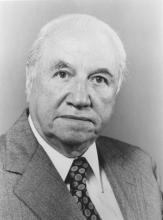
Raúl Federico Prebisch Linares
Argentine economist, central banker, ECLAC Executive Secretary, and first Secretary-General of UNCTAD
of 100 · stable trend · Some good traits but inconsistent
Standing
53/100
Raw Score
45/85
Confidence
58%
Evidence
Strong
About
Prebisch used state and multilateral institutions to push for fairer terms for poorer countries and became one of the twentieth century's most influential development economists. The strongest caution points are thin public evidence on devotional life and the contested long-run legacy of the protectionist strategies associated with his school of thought.
The observable pattern is substantially constructive in public-facing social responsibility: he repeatedly translated analysis about unequal trade into institutional work meant to protect weaker economies, stayed active after dismissal and financial strain, and later returned to support democratic reconstruction in Argentina. The profile remains under review because the record is much stronger on public-policy ethics than on explicit belief, worship, family care, or small-scale charitable behavior.
Five Pillars
Pillar scores (0–100%)
Prebisch scores best where the public record is clearest: persistent advocacy for weaker economies, institution-building under pressure, and continued service after personal setbacks. The score stays moderate because explicit evidence of God-centered worship is thin and historians still debate how much of his policy legacy encouraged overprotection or technocratic distance from ordinary citizens.
Goodness over time
Starts at 100 at birth, natural decay after accountability age, timeline events adjust the trajectory.
17 Criteria Scores
Individual item scores (0–5) with evidence notes
Core Worldview
No strong public record was found on explicit theistic belief; score kept cautious rather than punitive.
His public ethics imply accountability, but not specifically last-day belief.
Public record shows moral order concerns more than explicit unseen-order language.
No clear evidence located of scripture-guided public life.
No clear evidence located of prophetic modeling in public speech or conduct.
Contribution to Others
Public sources located for this historical figure are not rich on family-specific care.
No strong recurring public record was found on orphan-focused or youth-specific work.
His core career argued for policies to improve conditions for poorer and structurally disadvantaged populations.
He consistently advocated for countries pushed to the margins of the world economy.
Record shows advisory and institutional help more than direct-response aid.
His structuralist work aimed to loosen unfair dependence and economic subordination.
Personal Discipline
Routine prayer life is not meaningfully documented in the accessible public record.
No strong public documentation found of disciplined obligatory giving.
Reliability
He built and led major institutions credibly, but some of his public service also involved harsh technocratic measures and a debated policy legacy.
Stability Under Pressure
After his 1943 dismissal he endured financial strain and kept working.
Career setbacks did not end his public mission.
He kept operating through political conflict, diplomatic disappointment, and institutional pressure.
Timeline
Key events and documented turning points
Co-founded and became the first Governor of the Central Bank of Argentina
After the depression-era policy crisis, Prebisch helped create Argentina's Central Bank and used it to stabilize banking, regulate finance, and guide a more activist national economic response.
→ Built a durable state institution and established him as a rare economist-administrator with real governing capacity.
highLost the Central Bank post after the 1943 military takeover
The new military government dismissed Prebisch, cutting him off from the public sector and leaving him in real financial strain, including the need to rent out his house and sell his car.
→ The setback pushed him out of national office but redirected him toward a wider Latin American and international role.
mediumPublished the ECLAC manifesto on Latin American development
In The Economic Development of Latin America and its Principal Problems, Prebisch argued that weaker economies faced structurally unequal trade relations and needed development strategies that defended their interests.
→ The manifesto became the intellectual foundation of Latin American structuralism and made him the leading voice of a fairer-order argument.
highBecame the first Secretary-General of UNCTAD after leading ECLAC
After more than a decade leading ECLAC, Prebisch moved to UNCTAD and tried to turn the concerns of developing countries into a global negotiating project inside the United Nations.
→ Expanded his regional mission into a global platform for economic justice, even if diplomatic results remained partial.
highResigned after disappointment at UNCTAD II
After the New Delhi conference failed to deliver what he hoped, Prebisch announced his resignation from UNCTAD and left Geneva exhausted after years of constant travel and advocacy.
→ Marked a real limit to what his multilateral strategy could achieve, while still underscoring the seriousness of the effort.
mediumReturned to Argentina to advise the restored democratic government
Near the end of his life, Prebisch returned to Argentina in 1984 to work with the democratic government that had taken office after dictatorship.
→ Closed his career with a home-country role tied to institutional repair rather than personal retirement.
mediumPressure Tests
Behavior under crisis or scrutiny
Dismissal from the Central Bank and financial hardship
1943The 1943 military government removed Prebisch from the Central Bank, cutting off his public role and forcing him into a period of personal financial strain.
Response: He shifted into teaching, outside work, and eventually a wider Latin American mission rather than disappearing from public service.
positiveUNCTAD II disappointment and resignation
1968After failing to achieve what he hoped at UNCTAD II in New Delhi, he announced his resignation and left Geneva exhausted.
Response: The setback exposed the limits of multilateral reform but he continued regional planning and advisory work afterward.
mixedProgression
crisis years
The limits of diplomatic leverage, especially at UNCTAD II, created a real crisis point in an otherwise ascending career.
mixedcurrent stage
His late return to advise democratic Argentina left a legacy centered on institutional repair and the ethics of development.
upearly years
University training and early public-service work moved him from academic economics into statecraft.
upgrowth years
The Great Depression pushed him from orthodoxy toward activist state management and later regional structuralism.
upBehavioral Patterns
Positive
- • Repeatedly focused public work on the disadvantages faced by poorer and peripheral economies.
- • Built durable institutions instead of stopping at critique or one-off speeches.
- • Stayed engaged after dismissal, financial strain, and disappointing diplomatic setbacks.
Concerns
- • Public evidence is thin on direct religious practice, family care, and person-to-person charitable habits.
- • The long-run policy legacy of import-substitution and protectionist development remains historically contested.
Evidence Quality
5
Strong
2
Medium
1
Weak
Overall: strong
This profile evaluates observable public behavior and evidence, not the state of a person's soul.