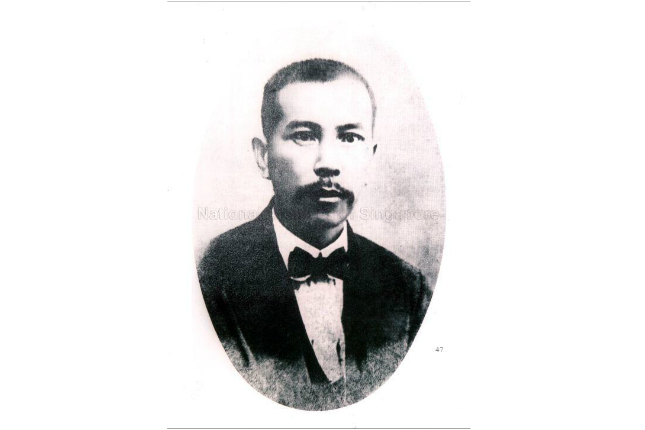
Tan Kah Kee
Entrepreneur, community leader, philanthropist, and education advocate
of 100 · stable trend · Strong moral/spiritual alignment
Standing
73/100
Raw Score
60/85
Confidence
78%
Evidence
High for biography, education philanthropy, relief work, and resilience; medium for inner belief and worship practice
About
Tan Kah Kee was a Fujian-born Singapore-based entrepreneur and community leader whose public record is dominated by repeated, large-scale education philanthropy, wartime relief, anti-opium reform, and institution-building in Singapore and China.
The strongest observable signals are social care, promise-keeping, and resilience: he repaid family business debts, funded schools even after business losses, mobilized regional relief during the Sino-Japanese War, and endured exile after becoming a Japanese target. Belief and worship scores are cautious because public sources frame him mainly through Confucian, Taoist, and Buddhist civic values rather than explicit devotional commitments.
Five Pillars
Pillar scores (0–100%)
Tan's score is driven by unusually strong public evidence of education philanthropy, wartime relief, debt responsibility, and resilience under financial and military pressure. The main scoring caution is that public sources document moral-civic traditions more clearly than explicit devotional belief or worship practice.
Goodness over time
Starts at 100 at birth, natural decay after accountability age, timeline events adjust the trajectory.
17 Criteria Scores
Individual item scores (0–5) with evidence notes
Core Worldview
No explicit public theistic creed found; sources emphasize Confucian/Taoist/Buddhist civic values.
No clear public evidence of last-day accountability belief.
Traditional Confucian and broader Chinese religious-cultural values support moral order.
Guidance evidence is mainly Confucian classics and civic tradition, not explicit revelation.
Public record shows respect for moral exemplars, but not prophetic modeling specifically.
Contribution to Others
Repaid family business debts and supported clan/community obligations.
Longstanding school founding and teacher-training work supported young people.
War relief, refugee support, and education access are strongly documented.
Relief work aided displaced and cut-off wartime civilians and diaspora families.
Repeated donations and fundraising campaigns show practical responsiveness.
Anti-opium reform, education access, and wartime logistics addressed constraints.
Personal Discipline
No direct routine worship record; score is cautious for culturally religious context.
Disciplined giving is very strong, but religious obligation framing is not explicit.
Reliability
Debt repayment and continued school financing after losses show strong commitment-keeping.
Stability Under Pressure
Maintained public commitments through business collapse and depression-era pressure.
Handled family business failure, exile, and loss without withdrawing from civic work.
Anti-Japanese relief work persisted despite danger and forced escape.
Timeline
Key events and documented turning points
Closed failed family businesses and repaid debts
After returning to Singapore and finding his father's businesses heavily indebted, Tan closed the firms and focused on clearing debts before rebuilding independently.
→ Established an early pattern of responsibility under financial pressure.
highBegan major Singapore school-building work
Tan helped establish Tao Nan School and later supported Ai Tong, Chong Hock Girls, Nanyang Girls, Nanyang Chinese High School, and other educational institutions.
→ Expanded access to education and teacher development.
highFounded Xiamen University
Tan founded Xiamen University as a private modern university and maintained it for many years.
→ Created a lasting university institution.
globalContinued school support after business collapse
Tan Kah Kee Ltd wound up during the Depression-era downturn, but he continued financing schools he had supported.
→ Public giving did not disappear when his own finances deteriorated.
highLed Southeast Asian China Relief fundraising
From 1937 to 1941, Tan led China Relief Fund work across Southeast Asia, raising very large sums for families, refugees, and resistance to Japanese aggression.
→ Converted regional influence into sustained relief mobilization during war.
globalEscaped Japanese targeting during World War II
Because of his anti-Japanese mobilization, Tan became a prime target and escaped to Java, where he spent time writing during exile.
→ Maintained his position under fear, danger, and displacement.
highLeft Singapore for China amid political suspicion
After the war, his newspaper criticized the Kuomintang and British authorities grew worried about political mobilization; he left for China in 1950 and later renounced British citizenship.
→ Later political alignment and Cold War suspicion complicated how different publics remembered him.
mediumPressure Tests
Behavior under crisis or scrutiny
Family business debt crisis
1903He found the family firms in debt after mismanagement and misappropriation.
Response: Closed the failed businesses, repaid debts, and rebuilt through his own enterprises.
strong integrity and financial-pressure resilienceGreat Depression and company winding-up
1934His business empire was damaged by competition, debt, and Depression conditions.
Response: Continued financing supported schools despite the collapse.
strong resilience and durable social-care commitmentJapanese invasion and wartime danger
1942His anti-Japanese relief work made him a target when Japanese forces reached Singapore.
Response: Escaped to Java and remained identified with anti-war relief and writing.
strong conflict-pressure resilienceProgression
crisis years
Regional fundraising, refugee relief, volunteer mobilization, business loss, and wartime danger.
stablecurrent stage
Late-life move to China amid colonial suspicion, reconstruction work, and legacy formation after death.
mixedearly years
Diligence, debt repayment, and business rebuilding after family failure.
improvinggrowth years
Business success paired with school founding, university-building, and donations.
improvingBehavioral Patterns
Positive
- • Education as a repeated social-care strategy from youth through late life.
- • Turning business wealth and networks into public institutions rather than only private accumulation.
Concerns
- • Belief and worship evidence is indirect and culturally contextual rather than explicit.
- • Political commitments in the late 1940s and 1950s were contested in colonial and Cold War settings.
Evidence Quality
5
Strong
1
Medium
0
Weak
Overall: high for biography, education philanthropy, relief work, and resilience; medium for inner belief and worship practice
This profile evaluates observable public behavior and documented commitments. It does not judge private intention, salvation, or hidden spiritual state.