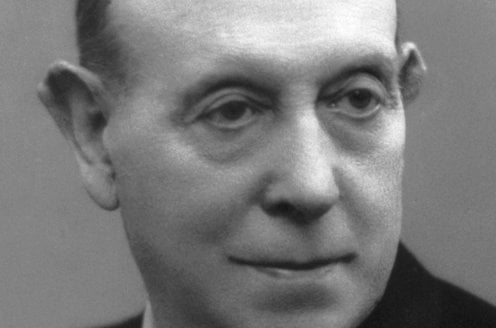
António Caetano de Abreu Freire Egas Moniz
Portuguese neurologist, cerebral angiography pioneer, and former foreign minister
of 100 · stable trend · Goodness is mostly theoretical
Standing
29/100
Raw Score
24/85
Confidence
75%
Evidence
Strong
About
Moniz left a split legacy. His development of cerebral angiography materially improved diagnosis of brain disease, but his advocacy for prefrontal leucotomy helped legitimize an irreversible practice that later became notorious for serious harm.
The strongest public evidence shows a brilliant, disciplined physician-statesman whose most famous intervention failed the deeper tests of caution, integrity, and care for vulnerable patients. Because public evidence on private faith and charity is thin, those parts of the profile stay cautious rather than accusatory.
Five Pillars
Pillar scores (0–100%)
Moniz scores low overall under this framework because the public record shows one major contribution to medicine but limited evidence of worship, charity, or covenantal moral orientation, and a decisive failure of caution toward highly vulnerable patients in the rise of lobotomy.
Goodness over time
Starts at 100 at birth, natural decay after accountability age, timeline events adjust the trajectory.
17 Criteria Scores
Individual item scores (0–5) with evidence notes
Core Worldview
No clear public record establishes strong theistic practice or explicit creed, so the score stays cautious.
Public evidence for afterlife-centered accountability is minimal.
His work implies confidence in rational order, but not clearly in a spiritual unseen order.
No strong public evidence ties his life to scripture-guided conduct.
No meaningful public evidence shows prophetic modeling as a governing reference point.
Contribution to Others
Public sources do not provide a reliable observable pattern of family-centered care.
No clear public pattern of youth-specific care emerged in the reviewed evidence.
His strongest positive social-care evidence is medical work aimed at people with severe brain and psychiatric illness.
Psychiatric patients and neurologic patients were often socially cut off, and part of his work did reach them.
Clinical and diagnostic work responded to patient need, but later psychosurgery weakens the score.
The public record does not show a repeated freedom-restoring pattern, and lobotomy often narrowed agency instead.
Personal Discipline
Public evidence for regular prayer or comparable devotional discipline is sparse.
Public evidence of disciplined religious giving is sparse.
Reliability
He built serious institutions and scholarly work, but the confidence with which leucotomy was promoted weighs against stronger trustworthiness.
Stability Under Pressure
Little direct evidence is available about his conduct under personal financial hardship.
After being shot and confined to a wheelchair, he continued working for years.
His public life shows stamina under political and professional pressure, though not always morally well-directed.
Timeline
Key events and documented turning points
Became a professor and began building a public medical career
After training in Coimbra, Bordeaux, and Paris, Moniz became a professor at the University of Coimbra and then moved in 1911 to the new chair of neurology in Lisbon, helping establish Portuguese neurology as an academic field.
→ Built the academic platform that later enabled both his diagnostic and psychosurgical influence.
mediumShifted from medicine into high-level diplomatic and political service
Moniz served in parliament, became Portuguese ambassador to Spain in 1917, then minister for foreign affairs and head of the Portuguese delegation to the Paris Peace Conference.
→ Demonstrated public trust and ambition beyond medicine, though this phase is morally thinner than his later clinical record.
mediumIntroduced cerebral angiography into clinical practice
Moniz developed arterial encephalography, later called cerebral angiography, which for decades became the main way to visualize brain vessels and diagnose intracranial disorders before CT scanning.
→ Created a durable medical advance with clear diagnostic benefit and lasting historical value.
highPromoted prefrontal leucotomy as a treatment for severe psychosis
Moniz and Almeida Lima carried out prefrontal leucotomy after limited early trials. The method spread internationally, but later evidence showed serious personality changes, mortality, epilepsy risk, and only mixed therapeutic benefit.
→ Became the defining ethical stain on his legacy because a desperate therapeutic context did not prevent wide irreversible harm.
highWas shot by a patient and spent the rest of his life in a wheelchair
After a patient shot him, Moniz became paraplegic, continued private medical practice, and stayed active intellectually until his death in 1955.
→ Shows real personal resilience even inside a legacy otherwise marked by grave professional controversy.
mediumReceived the Nobel Prize for the therapeutic value of leucotomy
The Nobel Prize institutionalized Moniz's fame, but it rewarded the part of his record that later came to symbolize medicine's willingness to legitimize a damaging treatment too early.
→ Locked in a globally visible mixed legacy: honored innovator in one sense, emblem of medical overreach in another.
highPressure Tests
Behavior under crisis or scrutiny
Psychiatric desperation before effective drugs
1936Moniz worked in a period with few reliable treatments for severe psychosis and chose an invasive surgical answer.
Response: He pressed forward with leucotomy and publicly described it in overly confident terms, which reads as mixed at best in hindsight.
mixedShooting by a patient
1939A patient shot Moniz, leaving him paraplegic and dependent on a wheelchair for the rest of his life.
Response: He continued private practice and intellectual work rather than disappearing from public life.
positiveGlobal validation through the Nobel Prize
1949Moniz received the Nobel Prize for leucotomy at the very moment the treatment's deeper harms were becoming harder to ignore.
Response: The award reinforced rather than corrected his most ethically compromised contribution.
negativeProgression
crisis years
The same drive for innovation crossed into ethically compromised territory with leucotomy.
downcurrent stage
His posthumous standing is permanently split between a major imaging advance and a notorious treatment legacy.
stableearly years
Early medical training and academic rise show discipline, intelligence, and broad ambition.
upgrowth years
His strongest constructive contribution came through cerebral angiography and the institutionalization of neurology.
upBehavioral Patterns
Positive
- • Turned neurological research into a genuinely lasting diagnostic tool through cerebral angiography.
- • Operated effectively inside elite academic and diplomatic institutions over decades.
- • Maintained work after severe personal injury.
Concerns
- • Advanced prefrontal leucotomy on evidence that now looks drastically insufficient for the level of risk involved.
- • Allowed desperation in psychiatry to outweigh deeper caution about irreversible human harm.
- • Public record is too thin on prayer, scripture-guided life, and ordinary charitable obligations to score those areas positively.
Evidence Quality
7
Strong
2
Medium
0
Weak
Overall: strong
This profile evaluates observable public behavior and evidence, not the state of a person's soul.