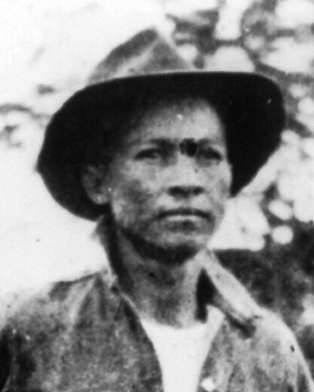
Augusto César Sandino
Nicaraguan guerrilla leader and anti-intervention nationalist symbol
of 100 · stable trend · Visibly decent and improving
Standing
62/100
Raw Score
54/85
Confidence
72%
Evidence
Medium
About
Sandino became the enduring face of Nicaraguan resistance to U.S. occupation by refusing to disarm in 1927, sustaining a guerrilla movement through 1933, and then accepting peace terms that included amnesty and agricultural cooperatives before his assassination in 1934.
The strongest public proof is steadiness under pressure and a repeated willingness to absorb danger for national sovereignty and peasant dignity. The profile stays below exemplary because the record is built around violent insurgency, devotional practice is not well documented, and later mythmaking makes some integrity and belief judgments necessarily cautious.
Five Pillars
Pillar scores (0–100%)
Sandino scores highest for resilience and a serious willingness to bear hardship in conflict. He also shows meaningful social concern through anti-occupation resistance and the 1933 cooperative settlement, but the record is held back by violence, sparse evidence of ordinary worship, and a belief profile shaped more by eclectic spirituality than by clearly documented scriptural discipline.
Goodness over time
Starts at 100 at birth, natural decay after accountability age, timeline events adjust the trajectory.
17 Criteria Scores
Individual item scores (0–5) with evidence notes
Core Worldview
Historical sources describe Sandino as theistic and spiritually serious, though in an eclectic rather than conventionally orthodox way.
His moral language implies accountability and honor, but explicit public evidence for afterlife-focused accountability is limited.
Spiritualist and theological influences are clearly documented in the Mexican phase of his formation.
A Christian frame is documented, but it sits alongside eclectic spiritual influences rather than clean scriptural discipline.
The public record is thinner on prophetic modeling than on general spiritual conviction.
Contribution to Others
Public evidence centers on national struggle, not family-specific support.
His politics claimed to defend marginalized rural families, but the record is not rich on direct youth-specific care.
The movement repeatedly spoke for peasants, workers, and the occupied poor, and the 1933 cooperative turn reinforced that concern.
His public posture consistently defended people cut off from power and national protection, especially rural northerners.
He became a visible advocate for those living under occupation and Guard violence, though not through service-style casework.
Freeing Nicaragua from foreign military control is the clearest social-care pattern in the record.
Personal Discipline
He appears spiritually committed, but ordinary prayer practice is not well documented in the public record.
The cooperative and peasant-facing turn suggests social obligation, but evidence for disciplined almsgiving is thin.
Reliability
He was steadfast in anti-intervention commitments and did accept the 1933 peace terms, but the violent insurgent setting keeps the integrity score moderate.
Stability Under Pressure
Childhood debt, poverty, and labor hardship are well documented and appear to have deepened rather than broken him.
Exile, poverty, and the death of his wife during the fragile peace year did not end his public commitments.
This is his clearest category: years of guerrilla resistance under sustained military pressure.
Timeline
Key events and documented turning points
Worked in Mexico's oil fields and absorbed political and spiritual ideas that shaped his later revolt
Years of poverty, labor, and exile culminated in mechanic work in Mexico, where Sandino absorbed socialism, anarchism, Freemasonry, spiritualism, and theological ideas about humanity's relationship to God.
→ This phase turned class grievance and humiliation into a durable anti-imperial and moral framework rather than a purely personal resentment.
mediumRefused the U.S.-brokered peace settlement and chose continued resistance
After most Liberal forces accepted the 1927 truce, Sandino refused to disarm, answered Moncada that he was not for sale, and began building the Defending Army of the National Sovereignty of Nicaragua.
→ He became the clearest continuing symbol of resistance to U.S. occupation, but also locked the conflict into a longer and bloodier phase.
highHis long guerrilla resistance outlasted the occupation and helped frame the U.S. withdrawal
By 1933 Sandino's six-year insurgency had become a hemispheric symbol of anti-imperial resistance, and the Marines withdrew from Nicaragua after years of failing to crush his movement.
→ The rebellion did not achieve autonomous rule, but it helped make foreign occupation politically unsustainable and fixed Sandino in the national memory.
highAccepted peace with President Sacasa, amnesty, and a turn toward agricultural cooperatives
After the Marines withdrew, Sandino met Sacasa's government, accepted amnesty, agreed to disarm most of his forces, and pursued agricultural cooperatives and a protected contingent in the north.
→ This was the clearest public move from armed struggle toward constructive social settlement in his record.
highAfter Guard attacks in Las Segovias, he pressed Sacasa through constitutional channels
When the National Guard attacked Sandinistas in Las Segovias in 1933, Sandino appealed to President Sacasa to declare the Guard unconstitutional instead of simply abandoning the peace framework.
→ The episode showed both his continued vulnerability and a real attempt to restrain conflict through government authority rather than immediate return to total war.
mediumWas abducted and murdered after leaving a meeting with Sacasa
After meeting President Sacasa and Somoza, Sandino left the presidential house believing the talks had gone well; he and close associates were then seized by the National Guard and killed.
→ His death ended the peace experiment, cleared Somoza's path to dictatorship, and transformed Sandino into a martyr-like symbol rather than a living political actor.
highPressure Tests
Behavior under crisis or scrutiny
Childhood poverty and illegitimacy
1905He grew up amid debt, labor, and status humiliation, including seeing his mother jailed for debt and working coffee fields in childhood.
Response: The record suggests these early pressures hardened his concern with dignity, inequality, and national honor.
positiveMarine occupation and counterinsurgency
1927He faced a better-armed U.S. and Nicaraguan campaign that hunted his movement across Las Segovias.
Response: He persisted for years under pursuit and became more rather than less defiant under external pressure.
mixed_positivePeace collapse and Guard hostility
1933Even after accepting peace, he faced Guard attacks, the death of his wife in childbirth, and deepening hostility from Somoza's camp.
Response: He continued pressing Sacasa through political and constitutional channels before being assassinated.
positiveProgression
crisis years
Peace exposed him to the National Guard and revealed how fragile a constructive transition from war could be.
mixedcurrent stage
His present stage is posthumous: a stable but contested legacy repeatedly reused in Nicaraguan politics.
stableearly years
Poverty, labor, and spiritual-political searching turned personal injury into a broader moral framework.
upgrowth years
Refusal to disarm and years of guerrilla resistance transformed him from a local fighter into a hemispheric symbol.
upBehavioral Patterns
Positive
- • Turned personal humiliation and poverty into a public politics of dignity and sovereignty.
- • Held to anti-intervention commitments even when better-equipped factions and foreign pressure urged surrender.
- • Accepted a peace-and-cooperatives path once the occupation ended instead of treating war as an end in itself.
Concerns
- • The same insurgent record that made him a hero also prolonged violence and keeps the case morally contested.
- • Documented spirituality is real but heterogeneous, making revealed-guidance and worship scores less certain than his political commitments.
- • Later political mythmaking can flatten important differences between Sandino himself and movements that borrowed his name.
Evidence Quality
5
Strong
3
Medium
0
Weak
Overall: medium
This profile measures observable public behavior and historical record. It does not judge hidden intention, the state of a soul, or salvation.