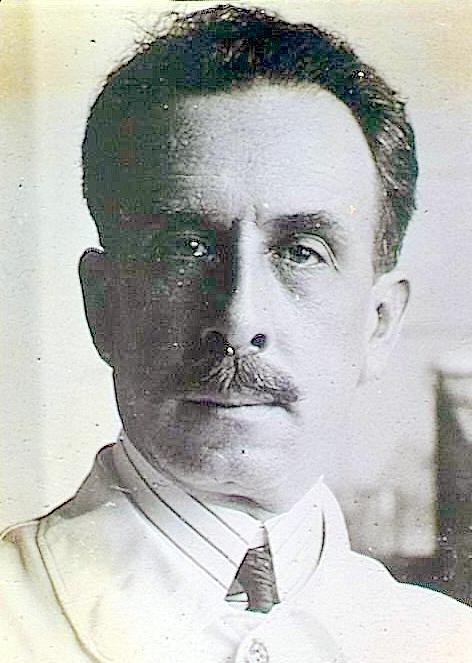
Carlos Ribeiro Justiniano Chagas
Brazilian physician-scientist, parasitologist, and public health reformer
of 100 · stable trend · Visibly decent and improving
Standing
58/100
Raw Score
48/85
Confidence
74%
Evidence
Strong
About
Chagas built a rare record of outward-facing scientific care: he discovered a new disease while treating neglected interior populations, then used his prestige to push Brazil toward rural sanitation, epidemic response, nursing education, and modern public-health administration. The main caution is not corruption or cruelty, but a real scientific controversy: he overstated thyroid-centered interpretations of chronic Chagas disease before later re-centering the stronger cardiac evidence.
The observable pattern is clearly constructive on social care, institution building, and resilience under pressure. The profile stays under review rather than strongly positive because direct evidence on belief and worship is thin in the public record, and because the controversy around his early chronic-disease claims should remain visible as a substantive integrity caution rather than erased by later fame.
Five Pillars
Pillar scores (0–100%)
Chagas scores best where the evidence is clearest: practical service to poor and medically abandoned people, institution building, and endurance under hard field and policy conditions. His total is held down not by obvious public vice, but by thin evidence on belief and worship, sparse observability around family obligations, and a real scientific overreach that later required correction.
Goodness over time
Starts at 100 at birth, natural decay after accountability age, timeline events adjust the trajectory.
17 Criteria Scores
Individual item scores (0–5) with evidence notes
Core Worldview
Brazilian Catholic formation is plausible, but explicit adult theistic practice is only lightly documented.
Public materials show moral seriousness more than explicit eschatological language.
Scientific and moral orientation suggest metaphysical seriousness, but evidence is indirect.
No strong public record of scripture-guided self-description was found.
Religious modeling is possible in context but not directly observable in the public record.
Contribution to Others
Public evidence focuses on institutions and patients, not family care.
Maternal-child health and pediatric disease attention create moderate evidence here.
His work repeatedly centered poor, abandoned rural populations harmed by endemic disease.
He repeatedly served remote interior and river populations far from urban care.
He repeatedly accepted public-health assignments in response to concrete crises.
Vector control, clinical recognition, and sanitary reform reduced structural disease burdens.
Personal Discipline
Some Christian formation is plausible, but regular adult prayer is not strongly documented.
No strong public record of disciplined religious giving was found.
Reliability
He turned discovery into long service and showed partial correction under criticism.
Stability Under Pressure
Evidence on direct financial hardship is limited.
The record shows endurance through illness, field hardship, and long rural assignments.
He kept working through epidemics, field conditions, and sustained scientific conflict.
Timeline
Key events and documented turning points
Led anti-malaria work for laborers in Itatinga
Oswaldo Cruz put Chagas in charge of fighting a malaria outbreak that was disrupting Companhia Docas de Santos works in Itatinga, where he argued that control had to reach the domestic spaces where mosquitoes were infecting workers and families.
→ Established him as a field physician who linked disease control to lived conditions rather than laboratory theory alone.
mediumIdentified Trypanosoma cruzi and the first human case of American trypanosomiasis
While working in Lassance, Chagas moved from observing the insect vector to identifying a new parasite and then finding it in the blood of the child Berenice, producing the foundational discovery later called Chagas disease.
→ Created a new disease concept that made neglected rural suffering medically legible and eventually actionable.
highPresented the disease's clinical picture and emphasized its chronic cardiac burden
At the National Academy of Medicine, Chagas and collaborators translated field and pathological observations into a clinical framework that helped physicians diagnose and take the disease seriously.
→ Moved the discovery from laboratory prestige into usable clinical knowledge, even though parts of the early chronic picture would later be contested.
highUsed Amazon sanitation reports to expose rural medical abandonment
Leading a scientific expedition to the Amazon valley, Chagas produced reports that described the medical and social abandonment of rural populations and treated endemic disease as a national responsibility.
→ Strengthened the case that science should serve abandoned populations and inform state action beyond coastal cities.
mediumNarrowed parts of his early chronic-disease thesis during a major scientific controversy
After Argentine and Brazilian critics challenged his thyroid-centered interpretation of chronic Chagas disease, Chagas defended the overall discovery but reduced emphasis on endocrine claims and reinforced the stronger cardiac evidence.
→ Showed some corrective capacity under scientific pressure, while leaving a lasting caution against treating all early claims as equally secure.
mediumTook over the Oswaldo Cruz Institute and expanded research, teaching, and production
After Oswaldo Cruz's death, Chagas directed the institute, formalized scientific sections, enlarged training, and broadened the production of biological products and official medicines.
→ Turned scientific prestige into durable institutional capacity rather than a single celebrated discovery.
highLed Rio's influenza response and then national public-health reform
Chagas coordinated the response to the Spanish flu in Rio de Janeiro and then, as the first head of the National Department of Public Health, modernized sanitary legislation, extended rural prophylaxis, and supported nursing and maternal-child health institutions.
→ Converted scientific authority into a broad state-care agenda with concrete services beyond elite urban centers.
highPressure Tests
Behavior under crisis or scrutiny
Scientific controversy over the chronic form of Chagas disease
1916Critics challenged key parts of his thyroid-centered interpretation and used the debate to question the disease's broader framing.
Response: He defended the core discovery but reduced emphasis on the most vulnerable endocrine claims and leaned harder on cardiac evidence.
mixedSpanish flu in Rio de Janeiro
1918The presidency placed him in charge of coordinating response to a devastating urban epidemic.
Response: He accepted operational responsibility rather than staying inside research prestige alone.
positiveNational sanitary reform under political strain
1920He had to carry public-health reform into contested state institutions while also directing the Oswaldo Cruz Institute.
Response: He built rural prophylaxis, professional training, and specialized services that outlasted the immediate political moment.
positiveProgression
crisis years
His greatest strain came when a celebrated discovery entered a sharp scientific and political controversy over how the chronic disease should be defined and what it symbolized about Brazil.
mixedcurrent stage
His legacy now reads as strongly constructive in social-health terms, with the public-health mission aging better than some of the first-round clinical interpretations.
upearly years
A medically ambitious student became a field-oriented sanitary physician after malaria work exposed how much disease control depended on ordinary housing and neglected labor conditions.
upgrowth years
The discovery of a new disease matured into a broader project of research, clinical interpretation, institution building, and public-health reform.
upBehavioral Patterns
Positive
- • Turned a field discovery into a continuing public-health and research program rather than a one-off scientific triumph.
- • Kept neglected rural disease tied to poverty, abandonment, and state responsibility in public argument.
- • Used leadership roles to grow teaching, biological production, epidemic response, and nursing capacity.
Concerns
- • The early chronic-thyroid thesis became a real scientific liability and should count as a visible integrity caution about over-interpretation.
- • The public record is thin on private worship, explicit creed, and family-level obligations, so those dimensions remain low-confidence.
Evidence Quality
6
Strong
3
Medium
0
Weak
Overall: strong
This profile evaluates observable public behavior and evidence, not the state of a person's soul.