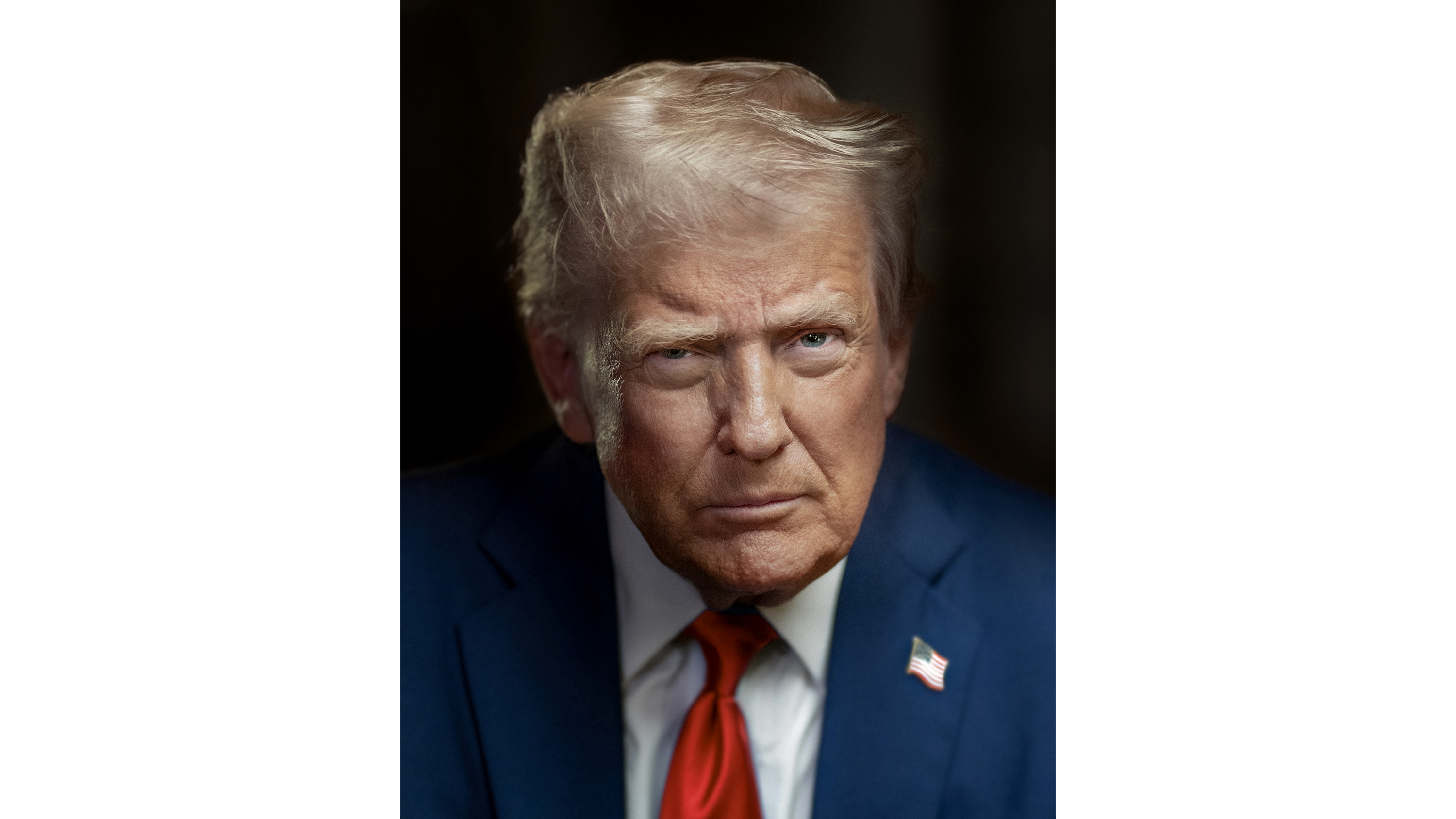
Donald John Trump
45th and 47th President of the United States; businessman and media personality
of 100 · unstable trend · Some good traits but inconsistent
Standing
30/100
Raw Score
29/85
Confidence
82%
Evidence
Strong
About
Trump remains one of the world's most consequential political figures. The strongest positive public evidence includes durable political resilience and a real bipartisan criminal-justice reform achievement, but the clearest repeated pattern is severe integrity strain: false election claims, January 6-related conduct, civil-fraud findings, and a felony conviction.
Observable conduct shows unusual stamina, high-scale influence, and occasional socially beneficial policy delivery, but repeated dishonesty and willingness to bend institutions for personal advantage materially lower the profile.
Five Pillars
Pillar scores (0–100%)
Trump scores above zero because the public record includes real policy delivery and extraordinary resilience, but repeated dishonesty and self-protective conduct overwhelm those strengths.
Goodness over time
Starts at 100 at birth, natural decay after accountability age, timeline events adjust the trajectory.
17 Criteria Scores
Individual item scores (0–5) with evidence notes
Core Worldview
Publicly identifies as Christian, but sustained theology-guided practice is not strongly evidenced.
Sometimes uses religious-moral language, though accountability is not a dominant public pattern.
Limited direct evidence beyond generic theistic language.
Some public Christian identification, but little strong evidence of scripture-guided restraint.
Limited evidence of prophetic moral modeling as a repeated public frame.
Contribution to Others
Strong family loyalty is visible, though often inward-facing rather than sacrificially broader.
Only limited strong evidence of sustained youth-focused care.
First Step Act and some working-class appeals count positively, though broader policy effects are contested.
Immigration rhetoric and policy record weigh strongly against this item.
Evidence exists but is uneven and not a defining repeated pattern.
Criminal-justice reform supports a modest positive score here.
Personal Discipline
Public evidence of regular prayer or worship discipline is thin.
Reliable public evidence of disciplined charitable obligation is thin.
Reliability
Civil-fraud findings, election lies, and criminal-record conduct push this item to zero.
Stability Under Pressure
Resilience exists, but public responses to financial pressure often come through litigation and self-protection.
Repeatedly returned to public activity after legal and physical threats.
Pressure responses often intensify conflict rather than restrain it.
Timeline
Key events and documented turning points
Signed the First Step Act
Trump signed bipartisan criminal-justice legislation that expanded earned-time credits, limited some mandatory minimum effects, and improved conditions for some federal prisoners.
→ Produced a tangible reform achievement with measurable benefits for some incarcerated people and their families.
highBegan sustained false claims about the 2020 election result
After major outlets called the election for Joe Biden, Trump began a prolonged public effort to deny the result and press unsupported fraud claims.
→ The campaign to overturn the loss deepened distrust in elections and set the stage for later institutional conflict.
highSupporters attacked the Capitol after his election-overturn effort
Trump addressed supporters near the White House as Congress met to certify the election; the day ended with a violent breach of the Capitol after weeks of his false-fraud campaign.
→ More than 100 officers were injured, the certification was interrupted, and the episode became a defining test of constitutional responsibility.
highCivil fraud judgment was finalized in New York
A New York civil fraud judgment formalized findings that Trump had lied for years about his wealth to obtain favorable loans and deals.
→ The judgment reinforced an already long-running pattern of reliability and truthfulness concerns in business conduct.
highWas found guilty on 34 felony counts in New York
A Manhattan jury found Trump guilty on 34 counts of falsifying business records in a case tied to hush-money payments during the 2016 campaign.
→ The conviction became the first felony conviction of a former U.S. president and deepened the integrity case against him.
highWon election to become the 47th president
Trump completed a historic return to office despite criminal cases, prior defeat, and repeated predictions that his political career was finished.
→ Confirmed extraordinary political durability and restored him to the highest public office in the country.
highIssued broad January 6 pardons and commutations
On his first day back in office, Trump granted sweeping clemency to people charged or convicted over the January 6 attack, including people convicted of assaulting police officers.
→ The move rewarded a constituency tied to the Capitol attack and sharpened concerns that loyalty to him outweighs institutional accountability.
highPressure Tests
Behavior under crisis or scrutiny
Election defeat
2020Trump lost reelection and faced a clear public test of whether he would accept lawful defeat.
Response: He chose escalation through unsupported fraud claims rather than concession.
negative integrity under pressureCampaigning through conviction and threats
2024He campaigned while facing multiple criminal cases, a felony conviction, and assassination attempts.
Response: He maintained public visibility and regained office, showing unusual stamina even while the surrounding conduct remained polarizing.
mixed resilienceReturn to office
2025On day one back in office he could either reinforce institutional accountability or reward loyal January 6 supporters.
Response: He chose sweeping clemency for January 6 defendants, including violent offenders.
negative integrity and judgmentProgression
crisis years
The 2020 loss, January 6 aftermath, and 2024 legal cases concentrated the clearest public evidence against his integrity.
downwardcurrent stage
His return to office restored maximum influence, but the latest accountability choices keep the moral signal unstable and negative.
unstableearly years
Business expansion and media branding made status, leverage, and image central tools long before politics.
upwardgrowth years
The 2016 win and presidency converted celebrity influence into direct state power.
upwardBehavioral Patterns
Positive
- • Can convert long-shot political survival into renewed institutional power.
- • Occasionally backs high-impact policies that materially affect prisoners and some working-class constituencies.
Concerns
- • Repeatedly uses false or misleading claims when facing loss or scrutiny.
- • Public compassion evidence is selective and often subordinate to loyalty politics or personal advantage.
- • Correction after harmful conduct is limited relative to the scale of the harm.
Evidence Quality
12
Strong
2
Medium
0
Weak
Overall: strong
This profile evaluates observable public behavior and evidence, not the state of a person's soul.