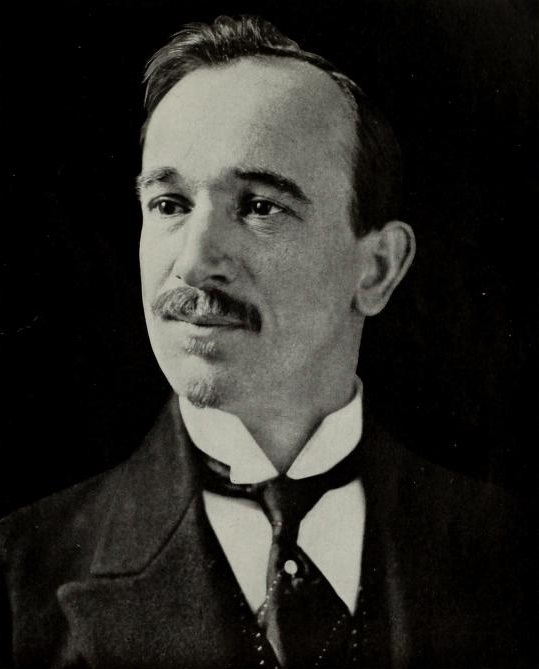
Edvard Beneš
Czechoslovak statesman, diplomat, foreign minister, and president
of 100 · declining trend · Some good traits but inconsistent
Standing
39/100
Raw Score
34/85
Confidence
76%
Evidence
Medium
About
Edvard Beneš helped build and restore Czechoslovakia, but his legacy is sharply darkened by postwar collective punishment and late-stage political capitulation.
The public record shows major nation-building and anti-Nazi resistance, but also harsh treatment of minorities after 1945 and repeated inability to hold the line in terminal crises.
Five Pillars
Pillar scores (0–100%)
Strong on state-building, diplomatic labor, and endurance under pressure; significantly weakened by the Beneš decrees, late-stage capitulations, and thin evidence for worship or direct care beyond national politics.
Goodness over time
Starts at 100 at birth, natural decay after accountability age, timeline events adjust the trajectory.
17 Criteria Scores
Individual item scores (0–5) with evidence notes
Core Worldview
Public record shows moral seriousness but not sustained theistic witness.
He often spoke in terms of duty and responsibility, though not clearly in eschatological language.
He appears committed to a moral order in history, but not in explicitly theological terms.
Little reliable evidence shows scripture or revealed guidance structuring his public life.
No strong public evidence of prophetic modeling appears in the accessible record.
Contribution to Others
Public evidence is overwhelmingly civic and political rather than family-centered.
Only thin indirect evidence exists for this item.
His record centers statecraft more than direct poverty relief.
He opened Czechoslovakia's borders to German and Austrian democrats in the prewar period.
He did answer national pleas in exile and worked for restoration, but evidence is mostly collective rather than person-to-person.
His strongest social-care case is helping free Czechs and Slovaks from foreign domination.
Personal Discipline
Reliable evidence of regular prayer is scarce.
Reliable evidence of disciplined religious giving is scarce.
Reliability
Long public service is real, but Munich, the expulsions, and the 1948 collapse keep this score low.
Stability Under Pressure
He came from modest origins, but strong public evidence here is limited.
Exile, illness, and repeated political defeat did not remove him from public duty.
He kept operating through war and state collapse, though not always with good judgment.
Timeline
Key events and documented turning points
Left for exile and helped organize the foreign resistance for Czech and Slovak independence
After World War I began, Beneš worked with Masaryk, left the Czech lands in 1915, and helped build the foreign resistance and the Czechoslovak National Council.
→ His organizing and diplomacy helped win recognition for the future Czechoslovak state by 1918.
highBecame foreign minister and helped anchor Czechoslovakia in the League of Nations system
As foreign minister, Beneš represented Czechoslovakia at the Paris Peace Conference, backed the League of Nations, and built the Little Entente and other alliances.
→ He gave the young state durable diplomatic architecture and international legitimacy.
highBecame president and backed democratic defense against Nazi pressure
After his election to the presidency, Beneš opened Czechoslovakia's borders to German and Austrian democrats, opposed the Sudeten German Party, and strengthened border defenses.
→ This was one of the clearest periods where his statecraft served threatened outsiders as well as his own country.
highResigned after the Munich settlement and loss of the Sudetenland
Excluded from the Munich talks and abandoned by Britain and France, Beneš accepted the settlement, lost the Sudetenland, and resigned into exile.
→ The episode shattered the First Republic and became a lasting mark against his reputation for steadiness under pressure.
highReturned to Prague after leading the recognized exile government through the war
Beneš invalidated Munich, won Allied recognition for the exile government, and returned to Prague in May 1945 as the only eastern European exile government leader allowed back after the war.
→ The return restored his authority and partially repaired the humiliation of 1938.
highUsed presidential decrees in a postwar settlement tied to expulsions of Germans and many Hungarians
Beginning in 1945, the so-called Beneš decrees stripped citizenship from millions of Sudeten Germans and tens of thousands of Hungarians unless they could prove wartime loyalty, while confiscating property without compensation; Prague Castle's own biography says Beneš saw wartime conditions as a moment to solve the German question by expulsion.
→ This became the central moral stain on his legacy and remains one of the most contentious features of postwar Central European history.
highAccepted a communist-dominated cabinet under pressure, then refused the new constitution and resigned
In February 1948 Beneš accepted a communist-dominated cabinet demanded by Klement Gottwald; later he refused to sign the new communist constitution and resigned in June.
→ The final phase shows both endurance and grave political failure, ending his life with the state lost again.
highPressure Tests
Behavior under crisis or scrutiny
Munich Agreement
1938France and Britain accepted the cession of the Sudetenland, leaving Czechoslovakia isolated and under German threat.
Response: Beneš yielded, resigned, and went into exile; the move can be read as realistic restraint or as a devastating collapse of nerve and trust.
mixedPostwar German question
1945After Nazi occupation, Beneš embraced a settlement that stripped many Germans and Hungarians of citizenship and property and supported expulsions.
Response: He treated expulsion as a state solution rather than insisting on individualized justice.
negativeCommunist takeover
1948Klement Gottwald pressed for a communist-dominated cabinet while Beneš was ill and politically cornered.
Response: He accepted the cabinet, later refused to sign the communist constitution, and resigned.
mixedProgression
crisis years
National catastrophe, exile recovery, and postwar vengeance produced the sharpest moral contradictions in his record.
downcurrent stage
As a historical legacy figure, he remains split between admired state founder and deeply contested authorizer of postwar coercion.
mixedearly years
A scholar from a modest rural family turned into an organizer of anti-Habsburg resistance and independence diplomacy.
upgrowth years
Foreign-policy skill and international networking turned him into one of the chief architects of interwar Czechoslovakia.
upBehavioral Patterns
Positive
- • Turned long-form diplomatic work into concrete state outcomes rather than symbolic rhetoric alone.
- • Repeatedly tied his career to Czech and Slovak self-determination, even through exile and illness.
- • Framed fascist aggression as a threat to democratic Europe, not only to his own office.
Concerns
- • Allowed national trauma after Munich and occupation to harden into support for collective punishment after the war.
- • Built much of his politics around geopolitical security rather than direct service to the poor or vulnerable as such.
- • His late-career judgment toward Soviet power proved badly flawed.
Evidence Quality
3
Strong
1
Medium
0
Weak
Overall: medium
This profile evaluates observable public behavior and evidence, not the state of a person's soul.