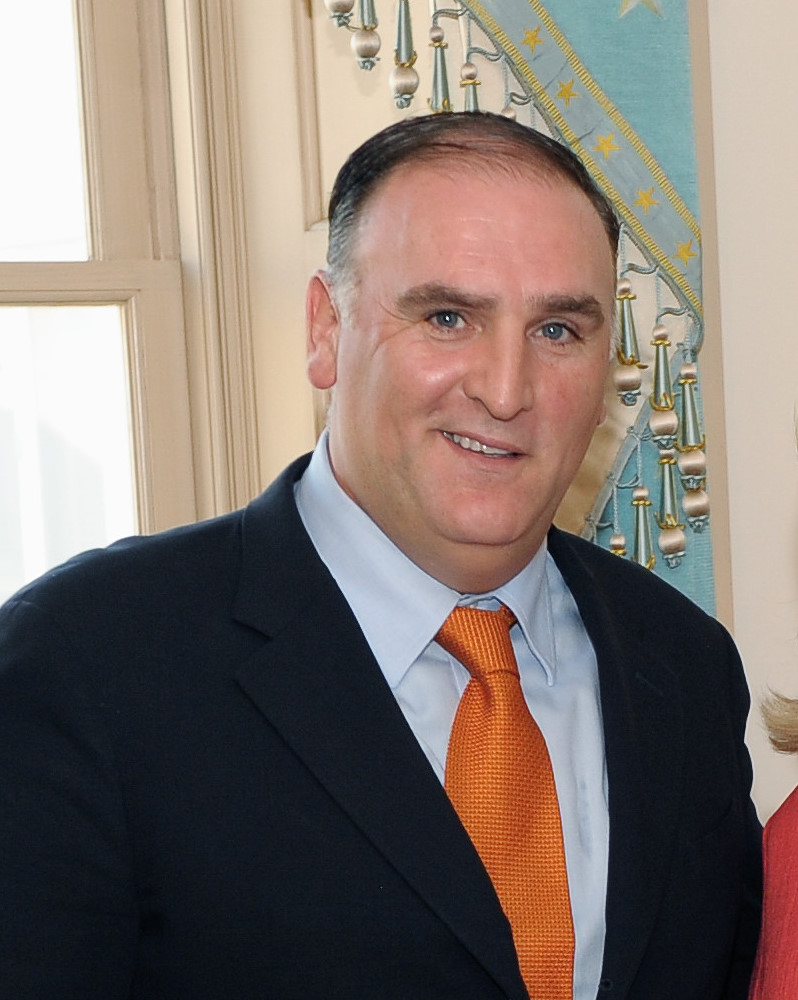
José Ramón Andrés Puerta
Chef, restaurateur, and founder of World Central Kitchen
of 100 · stable trend · Visibly decent and improving
Standing
66/100
Raw Score
55/85
Confidence
70%
Evidence
High
About
José Andrés built a new model of fast, locally rooted food relief and repeatedly put his public reputation behind feeding people caught in disaster, war, and displacement.
Social care, practical courage, and public-facing integrity are strongly evidenced, while belief and worship discipline are only moderately visible and World Central Kitchen's internal-governance controversies prevent a cleaner top-tier judgment.
Five Pillars
Pillar scores (0–100%)
The public record strongly supports unusually consistent care for vulnerable people and steady action under pressure. The main reasons this does not rate higher are thinner visibility into personal worship practice and meaningful governance failures inside the institution most closely tied to his moral claims.
Goodness over time
Starts at 100 at birth, natural decay after accountability age, timeline events adjust the trajectory.
17 Criteria Scores
Individual item scores (0–5) with evidence notes
Core Worldview
Public statements and faith-framed service suggest theistic belief, but not with unusually detailed creed language.
He often speaks in moral-accountability terms, though explicit afterlife language is sparse.
His public language implies meaning beyond material gain, but the evidence is moderate rather than deep.
There is some faith-shaped language around service and human dignity, but not a thick public scriptural record.
Public evidence does not strongly center prophetic modeling.
Contribution to Others
Public record shows a stable family life, but direct public evidence is limited.
Training cooks and feeding children and displaced families is a repeated pattern.
This is the strongest and clearest part of the record across multiple crises.
Refugees, asylum seekers, and isolated communities are repeatedly centered in his work.
WCK is built around rapid response to urgent needs voiced by communities.
He describes food relief as liberation and often supports people trapped by crisis systems.
Personal Discipline
Faith language is visible, but direct evidence of routine prayer is limited.
His life shows sustained and disciplined giving through service institutions, though not explicitly as formal religious obligation.
Reliability
He reliably turns public commitments into visible action, but governance failures keep this below top marks.
Stability Under Pressure
He has endured business and fundraising pressures without major public collapse, but evidence here is lighter.
Repeated return to hard environments after grief and exhaustion supports a strong score.
Ukraine and Gaza provide unusually strong evidence of persistence under extreme pressure.
Timeline
Key events and documented turning points
Began building his public service ethic through DC Central Kitchen
After moving to the United States at age 21, Andrés settled in Washington and volunteered with DC Central Kitchen, where he connected cooking to dignity, training, and hunger relief.
→ This volunteer work became the seed of his later humanitarian model rather than a side project detached from his culinary career.
mediumFounded World Central Kitchen after the Haiti earthquake
Andrés traveled to Haiti after the earthquake, listened to local needs, and turned that experience into World Central Kitchen's community-first model for crisis feeding and long-term food resilience.
→ This became the core institution through which his public goodness claims can be measured over time.
highWithdrew from a Trump hotel deal after anti-immigrant remarks
Andrés publicly canceled plans for a flagship restaurant at Trump International Hotel after Donald Trump's comments about immigrants, then endured a lawsuit rather than quietly separating values from business.
→ The decision supported the view that he will absorb financial and legal pressure to defend vulnerable communities in his public language.
mediumBuilt an island-wide meal network after Hurricane Maria
World Central Kitchen mobilized chefs, food trucks, and volunteers across Puerto Rico, eventually serving more than 3.7 million meals and reaching all 78 municipalities.
→ Puerto Rico became the clearest proof that Andrés' model could scale rapidly without waiting for slow institutional systems.
highUsed the pandemic response to feed families and keep restaurants alive
Through Chefs for America and Restaurants for the People, WCK delivered millions of meals during COVID-19 while paying local restaurants to cook for struggling neighbors.
→ His model not only fed people directly but also kept local food businesses working instead of treating them as separate from relief.
highSustained large-scale feeding work under wartime pressure in Ukraine
WCK fed Ukrainian families throughout Russia's full-scale invasion, pressed lawmakers for a more agile aid system, and Andrés later accepted Ukraine's Order of Merit on behalf of the local teams serving more than 175 million meals.
→ This deepened the evidence that his relief ethic holds in conflict zones, not only after natural disasters.
highGovernance concerns surfaced inside World Central Kitchen
Reporting by Bloomberg and Axios described sexual-harassment allegations, delayed HR infrastructure, and leadership upheaval inside WCK as the organization expanded rapidly.
→ The allegations do not erase the organization's public service, but they materially weaken a fully clean integrity reading because leadership oversight matters too.
mediumLost seven WCK colleagues in Gaza and publicly confronted the attack
After seven WCK team members were killed in an IDF strike despite deconfliction, Andrés and WCK paused operations, grieved publicly, and demanded accountability.
→ The event exposed both the moral seriousness of the work and the real cost borne by the organization under wartime pressure.
highResumed Gaza operations despite the losses
Less than a month after the strike, WCK resumed operations in Gaza and continued pushing food in by land, air, and sea while describing food as a universal right.
→ Resumption under grief is strong evidence that Andrés' humanitarian commitments are not only rhetorical.
highReceived the Presidential Medal of Freedom
The White House honored Andrés for humanitarian and culinary contributions after fifteen years of crisis-feeding work through WCK.
→ The award is not proof of moral purity, but it confirms the scale and durability of his public-service impact.
mediumPressure Tests
Behavior under crisis or scrutiny
Trump hotel dispute
2015A major business opportunity collided with rhetoric he believed demeaned immigrants.
Response: He withdrew publicly and absorbed legal and reputational conflict instead of keeping the deal quiet.
positivePandemic hunger and restaurant collapse
2020COVID-19 created simultaneous food insecurity and restaurant-sector shutdowns.
Response: He pushed WCK into a model that fed families while paying local restaurants to keep cooking.
positiveGaza convoy attack
2024Seven WCK colleagues were killed during a deconflicted humanitarian mission.
Response: He grieved publicly, demanded accountability, and resumed operations rather than abandoning the mission entirely.
positiveProgression
crisis years
War-zone feeding and pandemic response revealed both high courage and the organizational stress fractures that come with speed and scale.
mixedcurrent stage
He remains a globally influential humanitarian founder whose public moral signal is positive, though not uncomplicated.
sidewaysearly years
A rising chef developed a service ethic through community kitchens before disaster relief became his public identity.
upgrowth years
Haiti and Puerto Rico transformed Andrés from chef-philanthropist into a founder of a globally recognized relief institution.
upBehavioral Patterns
Positive
- • Fast, practical compassion focused on concrete needs instead of abstract messaging.
- • A habit of partnering locally rather than imposing a one-size-fits-all relief model.
- • Readiness to use status and business leverage in defense of immigrants and civilians.
Concerns
- • World Central Kitchen's explosive growth exposed real weaknesses in internal oversight.
- • Public spiritual evidence is sincere but not deep enough to support top-tier belief or worship scores.
Evidence Quality
14
Strong
3
Medium
1
Weak
Overall: high
This profile measures public behavior and evidence, not hidden intention or salvation.