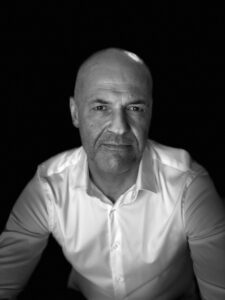
Khaled Hosseini
Afghan-American novelist, physician, and refugee advocate
of 100 · stable trend · Visibly decent and improving
Standing
73/100
Raw Score
62/85
Confidence
68%
Evidence
Good
About
Khaled Hosseini has repeatedly converted personal displacement, literary reach, and institutional access into visible advocacy for refugees and vulnerable Afghans.
His strongest public alignment is in social care, especially for refugees, women, and children in Afghanistan. The main limitations are thinner public evidence around devotional practice and a meaningful controversy around the real-world harms surrounding The Kite Runner adaptation.
Five Pillars
Pillar scores (0–100%)
Hosseini’s record is strongest where compassion becomes repeated public action: refugee advocacy, women-and-children-focused aid, and durable witness under crisis. The main downward adjustments come from thinner public evidence for devotional discipline and from a real controversy about representation and harm around The Kite Runner adaptation.
Goodness over time
Starts at 100 at birth, natural decay after accountability age, timeline events adjust the trajectory.
17 Criteria Scores
Individual item scores (0–5) with evidence notes
Core Worldview
Public record identifies him as a secular Muslim and his work is openly theistic rather than atheistic.
Moral accountability themes are strong in his work, but explicit public creed evidence is limited.
His storytelling and public moral language imply more than materialism, though evidence is indirect.
Public record does not strongly document scripture-centered practice, but it does not support rejection either.
Only lightly evidenced in direct public statements.
Contribution to Others
Public record is thin on family-directed support beyond affectionate public statements.
Foundation-backed education and child-focused aid are substantial and repeated.
Refugee and poverty-focused service is one of the clearest themes in his record.
Much of his visible work centers people displaced across borders and cut off from home.
His foundation and UNHCR work respond directly to urgent public humanitarian needs.
He repeatedly advocates for women, girls, and refugees under coercive conditions.
Personal Discipline
Personal prayer life is not well documented in strong public sources.
Sustained philanthropy is visible, though specifically religiously obligatory giving is not clearly documented.
Reliability
He has sustained long-term advocacy commitments and consistent public messaging across years.
Stability Under Pressure
His early immigrant rebuilding and long professional transition suggest steadiness under material pressure.
Displacement and identity rupture became constructive service rather than cynicism.
He returned publicly in periods of Afghan crisis and kept advocating for the vulnerable.
Timeline
Key events and documented turning points
Family granted asylum in the United States
After the Soviet invasion and upheaval in Afghanistan, Hosseini and his family sought and received political asylum in the United States, a formative displacement experience that later shaped his writing and refugee advocacy.
→ Exile became a durable source of empathy for refugees and returnees.
mediumPublished The Kite Runner
His debut novel became a global bestseller and brought broad public attention to Afghan history, displacement, guilt, and repair.
→ Hosseini gained a large platform later used for humanitarian advocacy.
highBecame a UNHCR Goodwill Ambassador
UNHCR appointed Hosseini as a Goodwill Ambassador, beginning a long-running public commitment to refugee protection, fundraising, and awareness building.
→ He turned literary fame into sustained institutional service rather than one-off advocacy.
highStarted the Khaled Hosseini Foundation after visiting Afghanistan
Moved from advocacy into organized delivery after meeting returnee families in Afghanistan; the foundation funds shelter, education, healthcare, and economic opportunity for vulnerable Afghans.
→ The foundation reports more than $2.2 million granted, 537 shelters built, education for more than 15,000 students, and support for maternal care infrastructure.
highThe Kite Runner adaptation controversy exposed real-world harm risks
The film adaptation triggered fear and backlash in Afghanistan over its assault scene and ethnic tensions; child actors were relocated for safety, and critics argued the work risked reducing Afghanistan to trauma and stereotype.
→ The episode complicated Hosseini’s public image and raised questions about artistic responsibility even though the direct security response was handled by the studio.
mediumTestified before the U.S. Senate on Afghan refugees and reintegration
Hosseini used his UNHCR role to give detailed public testimony about returnee conditions, shelter needs, and the responsibility of governments and donors.
→ His advocacy went beyond symbolism into documented policy-facing witness and argument.
highPublished Sea Prayer after refugee field visits
After meeting refugee families in Lebanon and Italy, Hosseini published Sea Prayer to humanize perilous sea crossings and push readers toward solidarity with refugees.
→ He kept using storytelling as a recurring tool for public moral attention rather than treating advocacy as separate from art.
mediumUsed his platform intensively during the Taliban return and refugee emergency
As Afghanistan’s government fell, Hosseini publicly pressed for asylum, resettlement, pressure on the Taliban over women’s rights, and ongoing support to grantees and refugees.
→ He responded to crisis with sustained interviews, statements, UNHCR appeals, and U.S.-based refugee support partnerships.
highPressure Tests
Behavior under crisis or scrutiny
Forced displacement from Afghanistan
1980War and political upheaval turned his family into asylum seekers.
Response: He rebuilt professionally in the U.S. and later turned that experience into empathetic advocacy for refugees.
positiveBacklash around The Kite Runner adaptation
2007The adaptation generated threats and criticism tied to child actor safety and representation.
Response: He defended the story’s integrity but the incident still marks a meaningful caution point in his record.
mixedTaliban return and 2021 Afghan emergency
2021Afghanistan entered a renewed humanitarian and rights crisis.
Response: He used media, foundation channels, and refugee networks to press for asylum, funding, and women’s rights protections.
positiveProgression
crisis years
He moved from symbolic sympathy into durable service structures through UNHCR and TKHF, then stayed publicly engaged during Afghanistan's renewed crises.
upcurrent stage
His present public posture remains one of steady refugee advocacy, public witness, and charitable support, with private devotional life still less visible than his public care work.
stableearly years
Displacement produced durable moral attention to refugees rather than private assimilation alone.
upgrowth years
A literary breakthrough created a mass audience for Afghan stories and moral themes of betrayal, repair, and mercy.
upBehavioral Patterns
Positive
- • Turns personal displacement into long-term service for displaced people.
- • Pairs storytelling with concrete institutional delivery through UNHCR and TKHF.
- • Returns publicly during crises instead of only speaking when promoting books.
Concerns
- • Private worship life is not very observable in high-quality public sources.
- • Some Afghan critics see his work as flattening the country into suffering for Western audiences.
Evidence Quality
7
Strong
3
Medium
1
Weak
Overall: good
This profile measures observable public behavior and evidence, not hidden intention, private repentance, or ultimate standing before God.