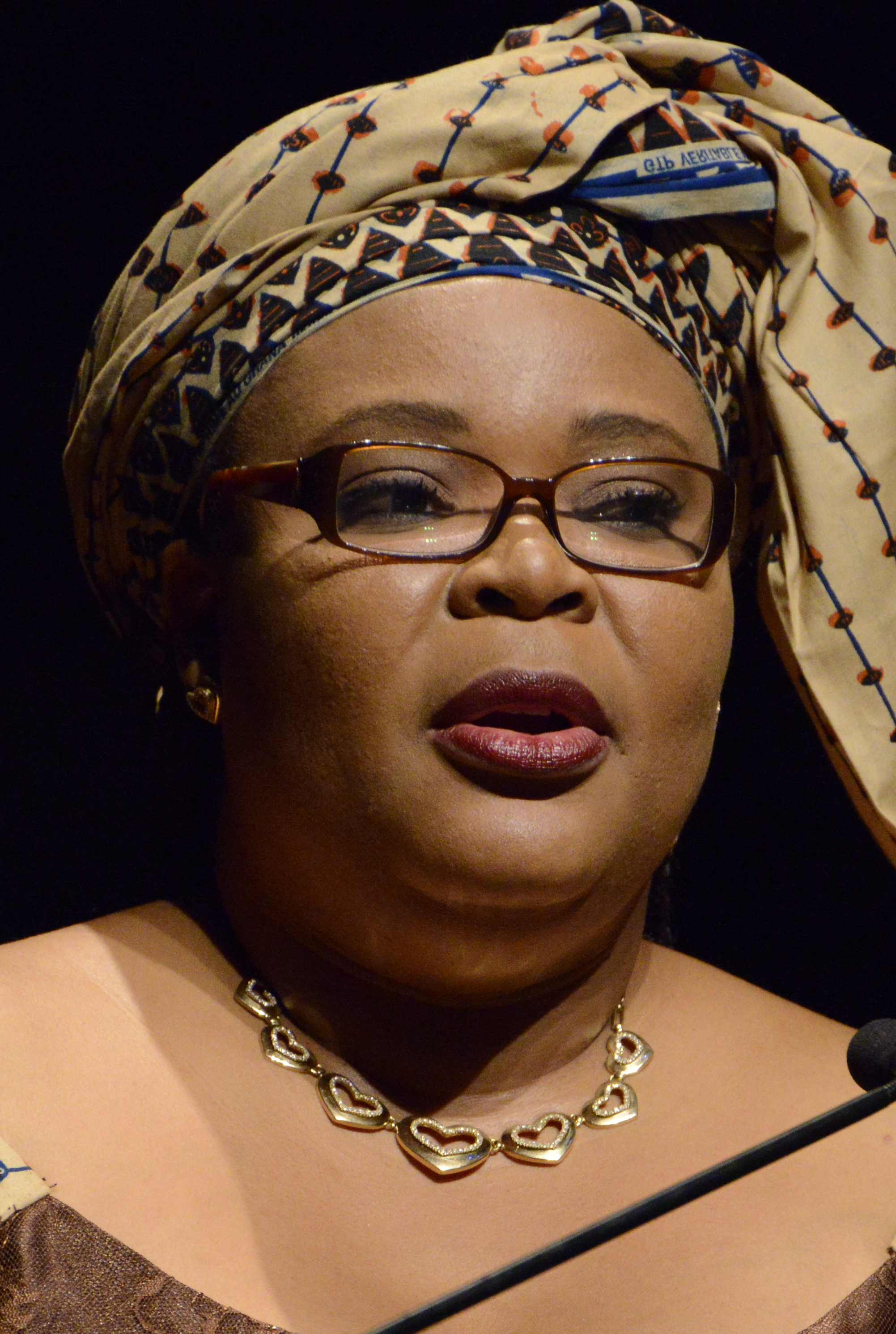
Leymah Roberta Gbowee
Liberian peace activist, social worker, Nobel Peace Prize laureate, and founder of Gbowee Peace Foundation Africa
of 100 · stable trend · Strong moral/spiritual alignment
Standing
83/100
Raw Score
69/85
Confidence
90%
Evidence
Strong with some institutional self reporting
About
Liberian peace activist whose strongest public record is repeated nonviolent action for peace, women's participation, and postwar accountability.
The evidence strongly supports high social care, high integrity, and unusually pressure-tested resilience. Belief and worship discipline are visible through public prayer language and faith-shaped organizing, but remain less directly observable than her public activism and institutional conduct.
Five Pillars
Pillar scores (0–100%)
Raw score 69 out of 85 and weighted score 82.5 out of 100. The strongest evidence is for social care, integrity, and resilience under pressure. Belief and worship score positively because public prayer, moral language, and faith-shaped organizing are well documented, but those areas remain less directly observable than her activism and public accountability record.
Goodness over time
Starts at 100 at birth, natural decay after accountability age, timeline events adjust the trajectory.
17 Criteria Scores
Individual item scores (0–5) with evidence notes
Core Worldview
Public prayer language and explicitly faith-shaped peace organizing are well documented.
Her public insistence on speaking up so history can judge reflects a strong accountability frame.
Her peace language repeatedly frames moral action as larger than immediate political reward.
Public references to prayer, fasting, and the Lord indicate revealed-guidance orientation.
The public record is morally and spiritually framed, but detailed prophet-centered language is less explicit.
Contribution to Others
Public evidence is thinner for family-specific care than for wider civic care.
She trained and worked with former child soldiers and later invested in girls and youth leadership.
Her activism consistently centered poor, displaced, hungry, and war-trapped civilians.
Her work crossed religious and social boundaries and later extended regionally.
The movement responded to visible pleas from women and families directly exposed to violence.
Her organizing helped loosen the grip of war leaders and broaden women's civic power.
Personal Discipline
Prayer and fasting were explicit public parts of the movement she helped lead.
Her record supports sacrificial service and institution-building, though not detailed reporting on formal obligatory almsgiving.
Reliability
She openly broke with former allies rather than masking disagreement for access.
Stability Under Pressure
The movement's early shoestring conditions and later advocacy under scarcity support a strong score.
Her public record shows sustained action despite war trauma and family strain.
She kept pressing for peace in direct confrontation with war actors and stalled negotiations.
Timeline
Key events and documented turning points
Civil war ended her planned medical path and pushed her toward trauma work
When war reached Monrovia, Gbowee's education plans were interrupted; later public accounts describe this shock as a turning point that moved her toward helping people damaged by war.
→ Early personal hardship became the foundation for later peacebuilding and care work rather than withdrawal.
mediumOrganized Women of Liberia Mass Action for Peace
Gbowee helped organize the grassroots movement that brought Christian and Muslim women together in public prayer, fasting, and nonviolent protest against the war.
→ The movement created a durable cross-religious civic force that could pressure armed leaders and keep peace demands visible.
highSustained pressure around Accra talks helped force a peace agreement
The movement followed negotiators to Ghana, staged a sit-in, and kept pressure on the warring parties until the Comprehensive Peace Agreement was signed in Accra in August 2003.
→ Women's organized nonviolence became one of the most visible civil-society pressures associated with the war's end.
highMobilized women politically after war instead of stopping at ceasefire
After the peace agreement, Gbowee helped mobilize Liberian women voters in the 2005 elections, linking peace activism to women's political participation and postwar reconstruction.
→ Her activism extended from antiwar protest into civic participation and support for a women-led postwar opening.
highAwarded the Nobel Peace Prize
The Norwegian Nobel Committee recognized Gbowee for nonviolent work for women's safety and women's participation in peacebuilding, validating the public significance of the movement she helped lead.
→ Her credibility and platform expanded internationally, increasing her ability to advocate for dignity, inclusion, and peace.
highResigned and publicly criticized nepotism and poverty under a former ally
Gbowee resigned from Liberia's Peace and Reconciliation Commission and publicly criticized President Ellen Johnson Sirleaf over nepotism and the failure to address poverty, despite having previously backed her politically.
→ This strengthened the integrity signal by showing willingness to criticize allied power instead of protecting reputation or access.
highWarned that Ebola threatened Liberia's fragile peace
During the Ebola crisis, Gbowee used her public platform to argue that weak public-health response and missing funds threatened the postwar gains Liberia had made.
→ Her advocacy showed continuity: she kept linking peace to practical human dignity rather than treating peace as merely the absence of war.
mediumContinued defining peace as dignity, not just absence of war
In a 2025 Nobel interview, Gbowee described peace as the presence of conditions that give dignity to all, showing continued moral focus on housing, safety, schools, and food rather than symbolic peace language alone.
→ Her later public voice is consistent with earlier work: peace remains tied to material dignity, inclusion, and local responsibility.
mediumPressure Tests
Behavior under crisis or scrutiny
Civil war and family disruption
1990War reached Monrovia when she was a teenager, collapsing ordinary life and exposing her generation to fear, scarcity, and social breakdown.
Response: She later moved into trauma counseling and peacebuilding rather than retreating from public responsibility.
positiveAccra peace-talk standoff
2003Negotiations risked stalling while civilians kept suffering.
Response: She and other women maintained disciplined nonviolent pressure even in the face of armed power and public risk.
positivePostwar alliance tested by corruption concerns
2012A former political ally held presidential power while accusations of nepotism and poverty neglect circulated widely.
Response: She resigned and spoke publicly instead of preserving access or silence.
positiveProgression
crisis years
Pressure did not narrow her moral focus; it exposed whether she would keep speaking when allies disappointed.
upcurrent stage
Her present public voice remains morally consistent, though more often through advocacy and teaching than direct frontline mobilization.
stableearly years
Personal exposure to war, fear, and social breakdown shaped a duty-driven response to suffering.
upgrowth years
Local trauma response matured into disciplined, mass women-led peace mobilization with national political consequences.
upBehavioral Patterns
Positive
- • Repeatedly united Christian and Muslim women around concrete nonviolent action rather than symbolic solidarity alone.
- • Kept centering women, children, and civilians most exposed to war, hunger, rape, and exclusion.
- • Used international status after the Nobel Prize to reinforce, not erase, local accountability concerns in Liberia.
Concerns
- • Public evidence is much stronger for activism and integrity than for private worship discipline or family-level care commitments.
- • Some later public interventions are broad political critique rather than directly measurable service outcomes.
Evidence Quality
12
Strong
4
Medium
0
Weak
Overall: strong_with_some_institutional_self_reporting
This profile evaluates observable conduct and public evidence, not the unseen state of a person's soul.