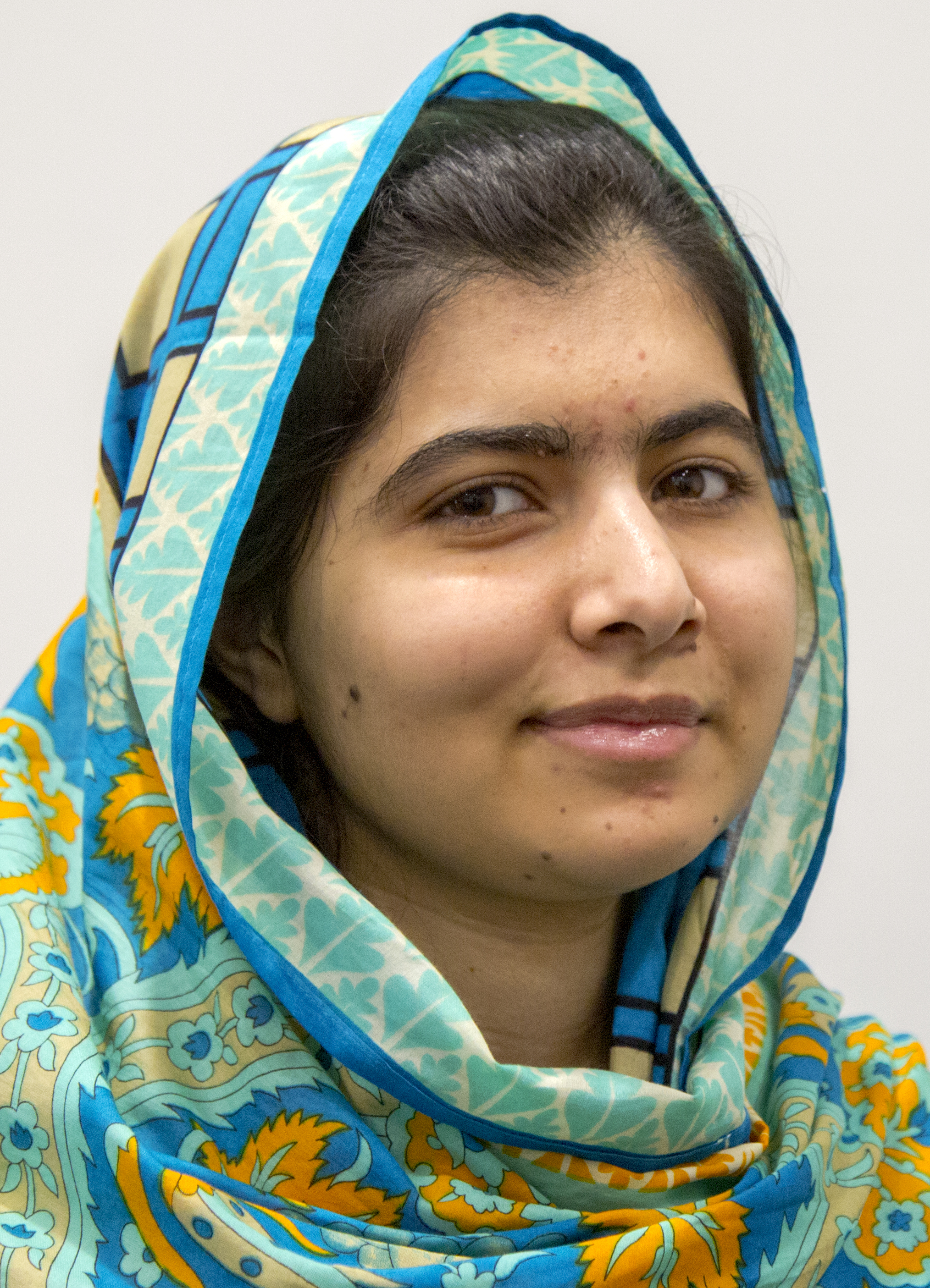
Malala Yousafzai
Education activist, writer, and co-founder of Malala Fund
of 100 · stable trend · Visibly decent and improving
Standing
88/100
Raw Score
75/85
Confidence
70%
Evidence
Strong
About
Malala Yousafzai has repeatedly translated personal risk into long-term advocacy and institution-building for girls' education.
Her strongest public evidence is in social care and resilience: she continued advocacy after surviving Taliban violence, built a durable philanthropic platform, and kept attention on girls excluded from school in Pakistan, refugee settings, and Afghanistan. Public evidence for private worship discipline and detailed creed remains partial rather than absent.
Five Pillars
Pillar scores (0–100%)
Public evidence most strongly supports social care, institution-building, and resilience under extreme pressure. Lower sub-scores mainly reflect limited observability of private devotional life rather than evidence of opposite behavior.
Goodness over time
Starts at 100 at birth, natural decay after accountability age, timeline events adjust the trajectory.
17 Criteria Scores
Individual item scores (0–5) with evidence notes
Core Worldview
Publicly identifies as Muslim and has spoken about her faith in God in interviews and her autobiography.
Frames her activism in terms of moral duty and answering to a higher purpose beyond personal safety.
Her willingness to risk death for education reflects conviction in a moral order beyond the material.
Has publicly referenced the Quran and Islamic teachings as part of her moral formation.
Has spoken about the Prophet as a model for justice and education in Islamic tradition.
Contribution to Others
Her return home and continuing work around family-rooted education activism support a strong but not definitive score.
Her work consistently targets unsupported girls, though orphan-specific evidence is limited.
Public evidence strongly shows support for girls blocked by poverty, conflict, and exclusion.
Refugee and displaced-girl education work is well documented.
Her institution channels support toward activists and girls asking for educational access.
She clearly challenges educational restriction, but direct evidence on freeing people from broader forms of material constraint is less robust.
Personal Discipline
Publicly practising Muslim who has referenced prayer as part of her daily life.
Co-founded Malala Fund and channels substantial resources to girls' education worldwide.
Reliability
Over time she has remained aligned with her stated mission and built durable institutions around it.
Stability Under Pressure
Her advocacy began in a conflict-affected setting with limited resources and continued across years.
Surviving the attack and returning to public work is exceptionally strong evidence.
Her public stance endured direct extremist violence and long-term polarization.
Timeline
Key events and documented turning points
Began BBC Urdu diary under Taliban rule
As 'Gul Makai,' Malala described school closures and fear in Swat, making local repression visible to a wider public while still a child.
→ Her testimony became an early documented pattern of public advocacy for girls' right to learn.
highSurvived Taliban assassination attempt
A Taliban gunman shot Malala on her school bus after she had spoken publicly for girls' education.
→ The attack triggered global condemnation and became the defining pressure test of her public life.
very_highDelivered U.N. Malala Day speech
On her 16th birthday, Malala addressed the United Nations and called for every child's right to education.
→ She moved from symbolic survivor to sustained global advocate with an institutional platform.
very_highCo-founded Malala Fund
Malala and her father launched Malala Fund to support girls' education through advocacy and grantmaking.
→ Her advocacy became durable institution-building rather than one-off speechmaking.
very_highBecame youngest Nobel Peace Prize laureate
Malala received the Nobel Peace Prize, expanding her reach and legitimizing her advocacy on girls' education.
→ The award amplified both her influence and scrutiny.
very_highSupported opening of school for Syrian refugee girls in Lebanon
Malala Fund backed a school in Lebanon intended to help Syrian refugee girls continue secondary education.
→ This was a concrete instance of resources reaching an education-deprived population, not only advocacy messaging.
highDesignated U.N. Messenger of Peace
The U.N. designated Malala as a Messenger of Peace with a special focus on girls' education.
→ Her education advocacy gained an ongoing official diplomatic platform.
highReturned to Pakistan for the first time after the attack
Malala and her family returned to Pakistan after more than five years away, reconnecting publicly with the country where her activism began.
→ The visit showed personal recovery and continued willingness to re-enter a polarized public space.
highFaced sustained backlash and polarization in Pakistan
Malala's public image in Pakistan remained polarized, with ideological backlash, conspiracy narratives, and criticism over perceived Western alignment.
→ The backlash complicates interpretation of domestic legitimacy but is weak evidence of wrongdoing by her; it mainly shows contested reception.
mediumGraduated from Oxford while continuing advocacy
Malala completed her PPE degree at Oxford, showing follow-through on her own education while remaining active in public advocacy.
→ Her personal conduct aligned with the educational opportunity she publicly advocates for others.
mediumIntensified advocacy on gender apartheid in Afghanistan
Malala Fund publicly pushed for recognition of gender apartheid in international law and funded Afghan education activists.
→ Her recent public work remained focused on vulnerable girls facing systemic exclusion.
highPressure Tests
Behavior under crisis or scrutiny
Taliban attack and recovery
2012She was shot for advocating girls' education and then underwent recovery in the U.K.
Response: She resumed advocacy rather than withdrawing from public life.
strong_positiveReturn to Pakistan
2018She returned to a country where her image remained politically contested.
Response: She re-engaged publicly with home communities while keeping her message focused on education.
positivePolarized criticism over personal and political statements
2021Public remarks on marriage and cultural norms triggered backlash in Pakistan.
Response: The record shows controversy and criticism, but not a broader pattern of deceit or abandonment of core advocacy commitments.
mixedProgression
crisis years
Trauma, exile, and backlash became part of the public record but did not end the core mission
stablecurrent stage
Mature advocacy centered on grantmaking, multilateral pressure, and girls blocked from education in conflict settings
stableearly years
From local student voice to early public witness under Taliban rule
improvinggrowth years
Rapid internationalization of a local cause into global advocacy and institution-building
improvingBehavioral Patterns
Positive
- • Turns personal suffering into sustained advocacy for others
- • Uses visibility to support concrete education initiatives
- • Maintains message discipline over time despite hostile pressure
Concerns
- • Public record is thinner on private spiritual discipline than on activism
- • High-profile global branding can make delivery details look larger than the independently visible record
- • Polarized domestic reception limits confidence about how broadly she is trusted within Pakistan
Evidence Quality
14
Strong
4
Medium
1
Weak
Overall: strong
This profile measures publicly observable behavior and evidence patterns, not hidden intention or the state of a person's soul.