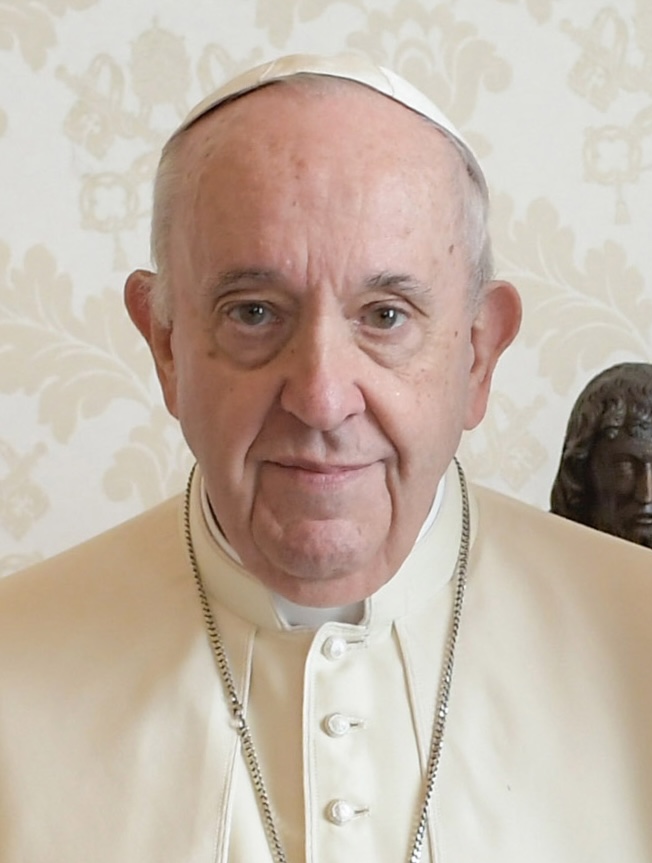
Jorge Mario Bergoglio
Jesuit priest, Archbishop of Buenos Aires, and 266th Pope of the Catholic Church
of 100 · stable trend · Strong moral/spiritual alignment
Standing
82/100
Raw Score
71/85
Confidence
86%
Evidence
Strong
About
Pope Francis paired unusually consistent public concern for poor people, migrants, prisoners, and the planet with a real pattern of humility and prayer, but his record on clergy-abuse accountability remained mixed and sometimes painfully late.
The observable record leans strongly positive on belief, worship, social care, and endurance under pressure. It does not reach exemplary because major integrity damage came from his initial treatment of Chilean abuse victims and the incomplete cleanup critics still saw elsewhere.
Five Pillars
Pillar scores (0–100%)
Francis scores highest where the record is clearest: explicit theistic belief, disciplined worship, and repeated public solidarity with poor and displaced people. He falls short of exemplary because the Chile abuse crisis exposed real integrity failure, and critics continued to judge parts of his wider abuse-reform record as incomplete.
Goodness over time
Starts at 100 at birth, natural decay after accountability age, timeline events adjust the trajectory.
17 Criteria Scores
Individual item scores (0–5) with evidence notes
Core Worldview
A lifelong Jesuit priest and pope with explicit, public God-centered language across his entire record.
He consistently preached judgment, mercy, repentance, and moral accountability before God.
His public teaching clearly assumed providence and sacramental meaning, though this item is less directly testable than the others.
His entire ministry was built around scripture, church teaching, and explicit claims of revealed moral guidance.
He repeatedly modeled public life on Christ, the saints, and scriptural examples rather than on secular branding alone.
Contribution to Others
The public record is not especially rich on family-specific care, so this stays modest rather than punitive.
His public concern for children, child labor, and Indigenous young people is real, though not the clearest signature of the record.
Concern for poor people was one of the clearest and most repeated themes of both his Argentine and papal ministry.
Migrants and refugees were a defining focus, from Lampedusa onward.
His meetings with survivors, prisoners, migrants, and Indigenous delegations show a real pattern of direct response to people who came before him.
His anti-trafficking, anti-death-penalty, and anti-exclusion messaging aimed at freeing people from structures that crush dignity.
Personal Discipline
Public evidence of lifelong prayer, sacramental discipline, and pastoral devotion is overwhelming.
As a practicing Christian leader he strongly promoted and modeled charitable obligation, though the exact scale of his personal giving is not public.
Reliability
Personal simplicity and many later corrections help, but the Chile abuse crisis and incomplete reforms keep integrity from scoring higher.
Stability Under Pressure
He took strong public stances during Argentina''s crisis years and maintained visible austerity.
He remained publicly steady through longstanding health limits and severe final illness.
He led through intense ideological conflict inside and outside the Church without abandoning his core themes.
Timeline
Key events and documented turning points
Ordained as a Jesuit priest after entering the Society of Jesus in 1958
Bergoglio entered the Jesuit novitiate in 1958 and was ordained a priest in 1969, beginning the long public ministry that later defined his moral witness.
→ Established a durable public pattern of disciplined religious vocation rather than purely symbolic belief.
mediumAsked Catholics to give to the poor instead of spending money on travel to his cardinal ceremony
When John Paul II made him a cardinal, Bergoglio told supporters not to spend money traveling to Rome but to donate that money to the poor instead.
→ Turned a moment of personal elevation into a visible act of redirected charity and anti-status signaling.
mediumBecame Pope Francis and set an early tone of humility and concern for the poor
After his election as pope, Francis quickly framed his leadership around simplicity and a poor church that is for the poor, giving the papacy a more outward-facing moral emphasis.
→ Reset expectations around papal style, poverty, and social accountability.
highMade Lampedusa the first pastoral visit of his papacy to spotlight migrants
Francis chose the Mediterranean island of Lampedusa for his first pastoral trip, making migrant suffering a defining moral priority of his pontificate.
→ Kept migration near the center of Catholic public witness for the next decade.
highIssued Laudato Si and tied care for creation to the fate of the poor
In Laudato Si, Francis addressed all people and linked ecological damage to moral responsibility, inequality, and the suffering of the poor.
→ Produced one of the signature public teachings of his papacy and broadened the moral vocabulary of climate responsibility.
highMisjudged Chilean abuse victims, then forced a wider reckoning
Francis'' defense of Bishop Juan Barros and dismissal of victims'' claims became the biggest crisis of his papacy. He later admitted serious error, apologized, and pushed the Chilean hierarchy into an unprecedented collective resignation offer.
→ Created a lasting integrity wound even though his reversal eventually moved the Church toward greater accountability.
highApologized in Canada for the Church role in Indigenous residential schools
During his penitential pilgrimage to Canada, Francis publicly expressed pain, remorse, and a plea for forgiveness for the suffering inflicted on Indigenous peoples in the residential school system.
→ Marked a real corrective act of public repentance, though not a full resolution of every demand for repair.
highClosed his papacy after severe illness and a long final hospitalization
After hospitalization beginning on 14 February 2025 for a respiratory crisis that developed into double pneumonia, Francis died on 21 April 2025, closing a 12-year papacy lived increasingly through visible physical frailty.
→ Fixed his final public record as one of perseverance under bodily weakness rather than a late-stage moral reversal.
highPressure Tests
Behavior under crisis or scrutiny
Argentina financial crisis leadership
2001During Argentina''s financial crisis, Bergoglio became a visible church voice while emphasizing social justice and practical solidarity.
Response: He kept a sober personal style and pushed Catholics toward concrete charity instead of prestige spending.
positiveChile abuse crisis
2018His public dismissal of victims in Chile triggered the biggest credibility crisis of his papacy.
Response: He eventually admitted he was wrong, apologized directly, and pressed the Chilean hierarchy toward resignations, leaving a mixed but not static record.
mixedFrailty and final illness
2025Severe respiratory illness and a 38-day hospitalization defined the final weeks of his papacy.
Response: He remained a visible spiritual symbol through weakness, which supports a positive resilience reading even as the record closed.
positiveProgression
crisis years
The abuse crisis in Chile exposed serious blind spots in judgment even as later reforms and apologies complicated the picture.
mixedcurrent stage
By the end of his life, the record was that of a globally influential religious leader with strong social-care evidence and a permanent accountability blemish.
stableearly years
Jesuit formation and priestly ministry established a durable pattern of disciplined faith and simple living.
upgrowth years
As archbishop and then pope, he scaled local pastoral instincts into global teaching on poverty, migration, and creation.
upBehavioral Patterns
Positive
- • Made public care for migrants and the poor a repeated governing priority instead of an occasional gesture.
- • Used major teaching documents to connect theology with environmental and social responsibility.
- • Returned to apology and reconciliation language when confronting historical harms in Canada.
Concerns
- • The Chile abuse crisis showed that his instincts could fail badly when institutional loyalty clouded judgment.
- • The papacy's accountability reforms remained partial enough that survivors often described the legacy as mixed.
Evidence Quality
8
Strong
2
Medium
0
Weak
Overall: strong
This profile evaluates observable public behavior and evidence, not the state of a person's soul.