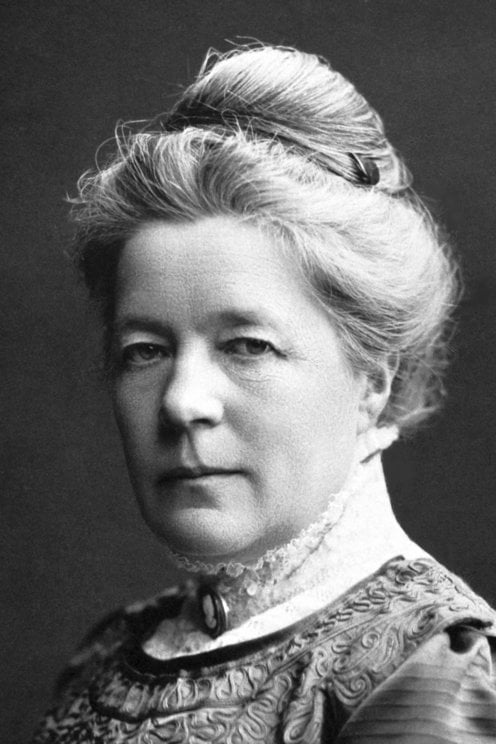
Selma Ottilia Lovisa Lagerlöf
Swedish novelist, teacher, Nobel laureate, and women's suffrage advocate
of 100 · stable trend · Visibly decent and improving
Standing
60/100
Raw Score
50/85
Confidence
74%
Evidence
Strong
About
Selma Lagerlöf's public record is strongest in durable cultural service, advocacy for women's civic inclusion, and steady moral seriousness across decades. The profile remains cautious because most evidence comes through literary work and public interventions rather than detailed records of routine devotional practice or direct household-level charity.
The observable pattern is constructive and steady. She repeatedly used literary prestige for public purposes, spoke for women's suffrage, wrote against war, and helped Nelly Sachs reach safety in Sweden, but the evidence is still much stronger for public moral influence than for private worship discipline.
Five Pillars
Pillar scores (0–100%)
Lagerlöf scores best on integrity, resilience, and outward social contribution because the public record shows long-term disciplined work, civic advocacy, and a concrete late-life act of rescue. The score stays moderate rather than exceptional because the evidence is much thinner on routine worship and direct material charity than on moral imagination expressed through writing and public influence.
Goodness over time
Starts at 100 at birth, natural decay after accountability age, timeline events adjust the trajectory.
17 Criteria Scores
Individual item scores (0–5) with evidence notes
Core Worldview
Christian and spiritual themes are strong in the work, but direct personal creed language is only partly observable.
Her fiction repeatedly treats moral consequence and judgment as serious realities.
Spiritual perception is central to her public literary record.
Biblical and Christian frames recur, though her personal doctrinal commitments remain partly opaque.
Moral guidance is evident, but explicit prophetic modeling is less directly documented.
Contribution to Others
She restored Mårbacka and remained tied to family obligations, but detailed caregiving evidence is limited.
Nils Holgersson was designed as educational service for schoolchildren.
Her work often humanized the poor and socially trapped, though direct material aid evidence is thinner.
Her help for Nelly Sachs and engagement with migration themes support a moderate positive score.
Some direct responsiveness is visible, but the record is not rich in case-by-case aid examples.
Suffrage advocacy and help for a refugee show real action against constraint.
Personal Discipline
Private devotional routine is not well documented.
The public record does not show sustained documented charity giving, but neither does it show indifference.
Reliability
Long-term disciplined work and public commitments were sustained across decades.
Stability Under Pressure
Family insolvency did not stop her vocational discipline.
She sustained public work across years of pressure and age-related decline.
She responded to wartime and Nazi-era pressure with moral intervention rather than withdrawal.
Timeline
Key events and documented turning points
Debuted with Gösta Berling's Saga and began a public literary vocation
Her first novel broke with prevailing realism and established a career built on folklore, moral struggle, and human consequence rather than fashionable convention.
→ Created the public platform she later used for education, women's civic advocacy, and humanitarian intervention.
highTurned field research and religious-social conflict into Jerusalem
After travelling and studying the Swedish emigrant colony in Jerusalem, she produced a major novel about faith, sacrifice, community pressure, and moral choice.
→ Strengthened the pattern that she treated belief and moral accountability as serious public subjects rather than decorative themes.
highCompleted Nils Holgersson as a geography reader for schoolchildren
Commissioned to help educate Swedish pupils, she spent long periods travelling and preparing a work that combined national geography, empathy, and storytelling for the young.
→ Shows a concrete form of service to the young through educational literature, not only elite literary prestige.
highUsed her prestige publicly for women's suffrage
She spoke at the International Suffrage Congress in Stockholm and became a respected public voice for women's political participation.
→ Demonstrated that her public influence was not kept safely literary; she used it in a live civic struggle.
highAnswered wartime pressure with Bannlyst
After World War I created pressure for a clear moral response, she published Bannlyst, framing war as a profound human degradation.
→ Supports a pattern of moral steadiness under social pressure rather than quiet retreat.
mediumUsed her influence to help Nelly Sachs escape Nazi Germany
Late in life, she intervened to help secure refuge in Sweden for the Jewish writer Nelly Sachs and Sachs's mother as Nazi danger closed in.
→ Provides strong direct evidence of helping people under acute constraint, not just writing about moral concern.
highPressure Tests
Behavior under crisis or scrutiny
Family insolvency and loss of Mårbacka
1880Her family estate was lost after financial collapse, creating a long period of insecurity and displacement.
Response: She kept teaching, writing, and eventually used later success to buy back the property rather than abandoning disciplined work.
positiveWorld War I moral pressure
1918War created public expectation that major writers would say something morally serious.
Response: She answered with Bannlyst, a work that treated war as deeply degrading rather than normal or glorious.
positiveNazi danger to Nelly Sachs
1940A fellow writer and her mother faced escalating danger in Germany as Nazi persecution intensified.
Response: Despite age and declining health, Lagerlöf used influence to support Sachs's move to safety in Sweden.
positiveProgression
crisis years
Political and wartime pressure drew her more openly into civic and moral intervention.
upcurrent stage
Her legacy remains strongly positive for moral imagination and civic use of influence, while private devotion and direct charity remain less observable.
stableearly years
Home-based literary formation and teacher training turned a provincial childhood into disciplined intellectual preparation.
upgrowth years
Her literary vocation widened into travel, research, and an expanding public moral imagination.
upBehavioral Patterns
Positive
- • Repeatedly used literature to humanize the poor, the spiritually struggling, and people on the social margins.
- • Publicly attached her name to women's suffrage rather than staying safely above politics.
- • Late-life help for Nelly Sachs shows that her compassion was not only symbolic.
Concerns
- • Public evidence for direct almsgiving, routine prayer, and congregational religious practice is limited.
- • Much of the case for social care comes through writing and public standing rather than repeated documented material aid.
Evidence Quality
9
Strong
1
Medium
0
Weak
Overall: strong
This profile evaluates observable public behavior and evidence, not the state of a person's soul.