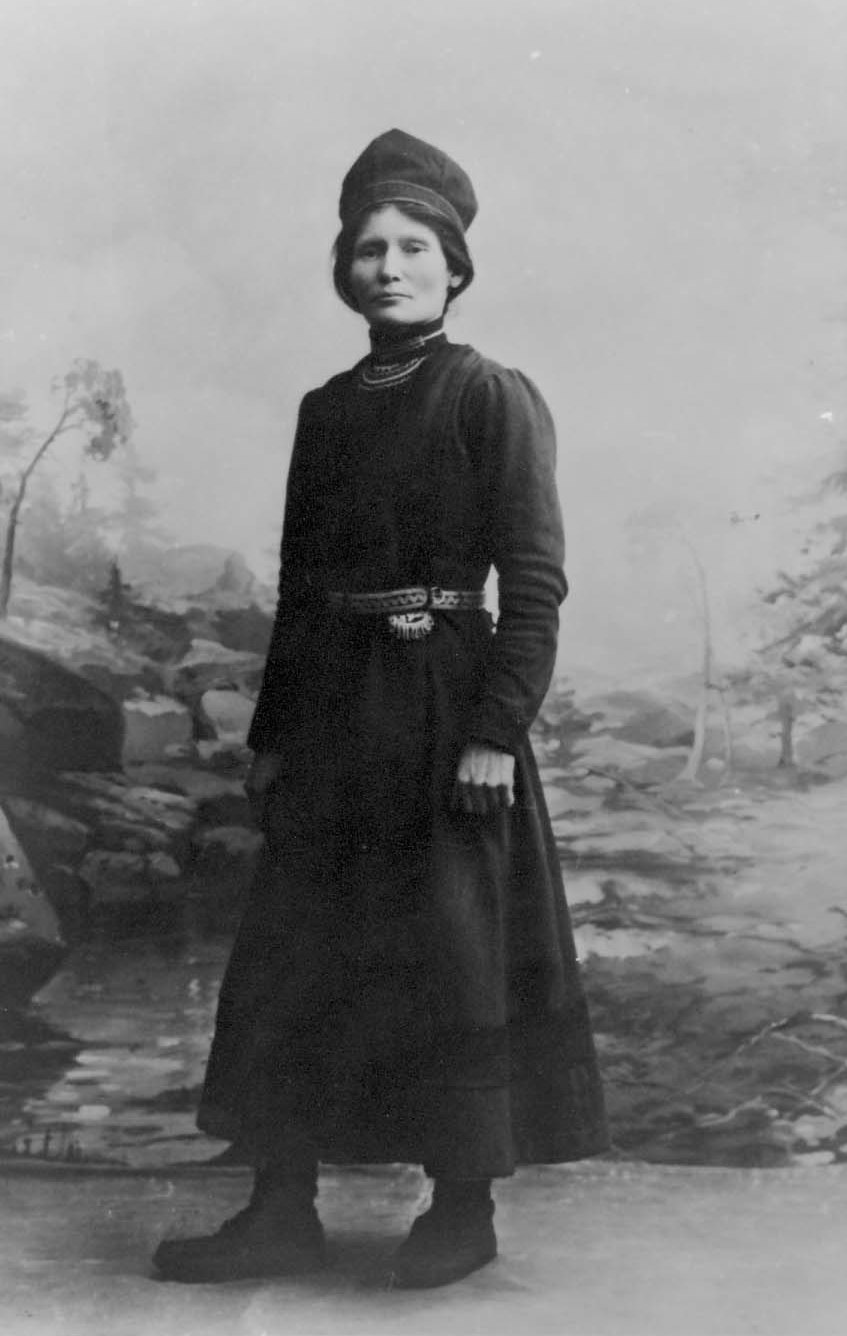
Elsa Stina Larsdotter Laula Renberg
South Sami activist, writer, organizer, reindeer herder, and midwife-trained political pioneer
of 100 · stable trend · Strong moral/spiritual alignment
Standing
71/100
Raw Score
61/85
Confidence
72%
Evidence
High for public activism and life dates; medium for private faith and worship
About
Elsa Laula Renberg was a South Sami activist, writer, organizer, reindeer herder, and political pioneer who helped launch modern Sami organizing across Sweden and Norway.
Her observable record is strongest in social care, resilience, and integrity: she organized under poverty, gender constraints, land dispossession, media criticism, and internal disagreement. Belief and worship are scored cautiously because sources show Christian institutional context but limited direct evidence of private devotional practice.
Five Pillars
Pillar scores (0–100%)
Strong public alignment through social care, institution-building, rights advocacy, and resilience; belief and worship are positive but cautious due to indirect evidence.
Goodness over time
Starts at 100 at birth, natural decay after accountability age, timeline events adjust the trajectory.
17 Criteria Scores
Individual item scores (0–5) with evidence notes
Core Worldview
Christian institutional context is visible, but direct creed statements are limited.
Moral accountability is visible in rights language; explicit eschatological evidence is limited.
Mission-school and church-linked context supports a cautious positive score.
Christian public context is present, but direct scriptural practice evidence is limited.
General Christian context supports a cautious positive score.
Contribution to Others
Family land hardship became part of a wider public commitment to Sami families and land.
Women association purpose included schooling for Sami children.
Advocated for Sami communities facing poverty, discrimination, and land pressure.
Cross-border organizing connected dispersed Sami communities.
Served as spokesperson for named Sami districts and delegations.
Sustained advocacy against discriminatory land, school, and political exclusion structures.
Personal Discipline
No strong public evidence of private prayer routine; score remains cautious.
Public service is strong, but disciplined religious charity is not directly documented.
Reliability
Repeatedly followed through on organizing commitments over decades.
Stability Under Pressure
Continued public work despite poverty, funding constraints, and livelihood pressure.
Persisted after family tragedy, motherhood demands, illness, and bereavement.
Continued under public attacks, state resistance, and internal movement disagreement.
Timeline
Key events and documented turning points
Family land conflict and unexplained drowning of father and brother
Her family was in conflict over the right to live and farm on traditional Sami tax land when her father and young brother drowned shortly before legal proceedings; the event was not investigated in the sources consulted.
→ This hardship formed part of the context for her later land-rights activism.
highPublished Inför Lif eller Död and led the first known nationwide Sami organization
In 1904 she published a political pamphlet on Sami land, education, voting rights, and survival, and helped create Lapparnas Centralförbund, becoming its leader.
→ Created a written and organizational foundation for modern Sami political mobilization.
highRepresented Sami concerns before King Oscar II
As spokesperson for Sami in Åsele, Vilhelmina, and Lycksele, she traveled to Stockholm to present grievances about Sami conditions and land issues to King Oscar II.
→ Brought Sami grievances into public and royal attention and built alliances with reform networks.
mediumFounded Brurskankens Sami women's association
Renberg led the formation of Brurskankens Lappkvinde Forening / Brurskankens samiske kvindeforening, an early independent Sami women's organization that worked for schooling and Sami organization.
→ Strengthened women's participation and made education for Sami children a public organizing goal.
highCentral force behind the first Sami National Assembly in Trondheim
Renberg and the Brurskanken women's association helped convene the 1917 assembly in Trondheim, where reindeer husbandry, schooling, law, and political organization were central issues; about 150 people participated, including many women.
→ The meeting became a landmark for cross-border Sami politics and is the basis for Sami National Day on February 6.
very highContinued Sami political representation efforts after the assemblies
Renberg participated in later Sami meetings and was placed second on a Nordland Sami electoral list in 1924, as organizers sought direct Sami representation in parliament.
→ The lists did not win significant votes, but the effort shows persistence in institutional political strategy.
mediumDied after a life of activism under strain
Renberg died of tuberculosis in Brønnøy in 1931 after decades of reindeer-herding work, motherhood, travel, organizing, and public pressure.
→ Her work was later reclaimed as a foundation for Sami national organizing, women's activism, and commemoration.
mediumPressure Tests
Behavior under crisis or scrutiny
Land conflict and family bereavement
1899Her family faced land conflict, poverty, and the unexplained drowning of her father and young brother.
Response: She later made Sami land rights and political voice central to her public work.
strong resilience under personal and financial hardshipPublic criticism and gendered controversy
1904Her public advocacy and writing drew harsh criticism and ridicule in a period when Sami people and women had little political power.
Response: She continued writing, organizing, speaking, and building institutions across borders.
strong conflict-pressure resiliencePost-1917 organizing difficulties
1921Later Sami meetings and representation campaigns faced weak attendance, limited funding, state resistance, and internal strategic disagreements.
Response: She remained connected to Sami political efforts, including electoral representation attempts.
steady but constrained institutional commitmentProgression
crisis years
Her organizations and electoral efforts faced limited funding, state resistance, internal disagreement, and short-lived institutional capacity.
stablecurrent stage
After her death, later Sami institutions and commemorations treated her work as foundational for Sami national organizing.
stableearly years
Childhood poverty, mission schooling, family land conflict, and rare access to midwife training shaped a public voice grounded in lived marginalization.
improvinggrowth years
She moved from local grievance to national organization, pamphlet writing, women's association building, and public representation of Sami concerns.
improvingBehavioral Patterns
Positive
- • Persistent Sami rights advocacy
- • Women-centered institution building
- • Resilience under poverty and public pressure
Evidence Quality
5
Strong
2
Medium
1
Weak
Overall: high for public activism and life dates; medium for private faith and worship
This profile evaluates observable public behavior and evidence patterns. It does not judge Elsa Laula Renberg's soul, hidden intention, or final standing with God.