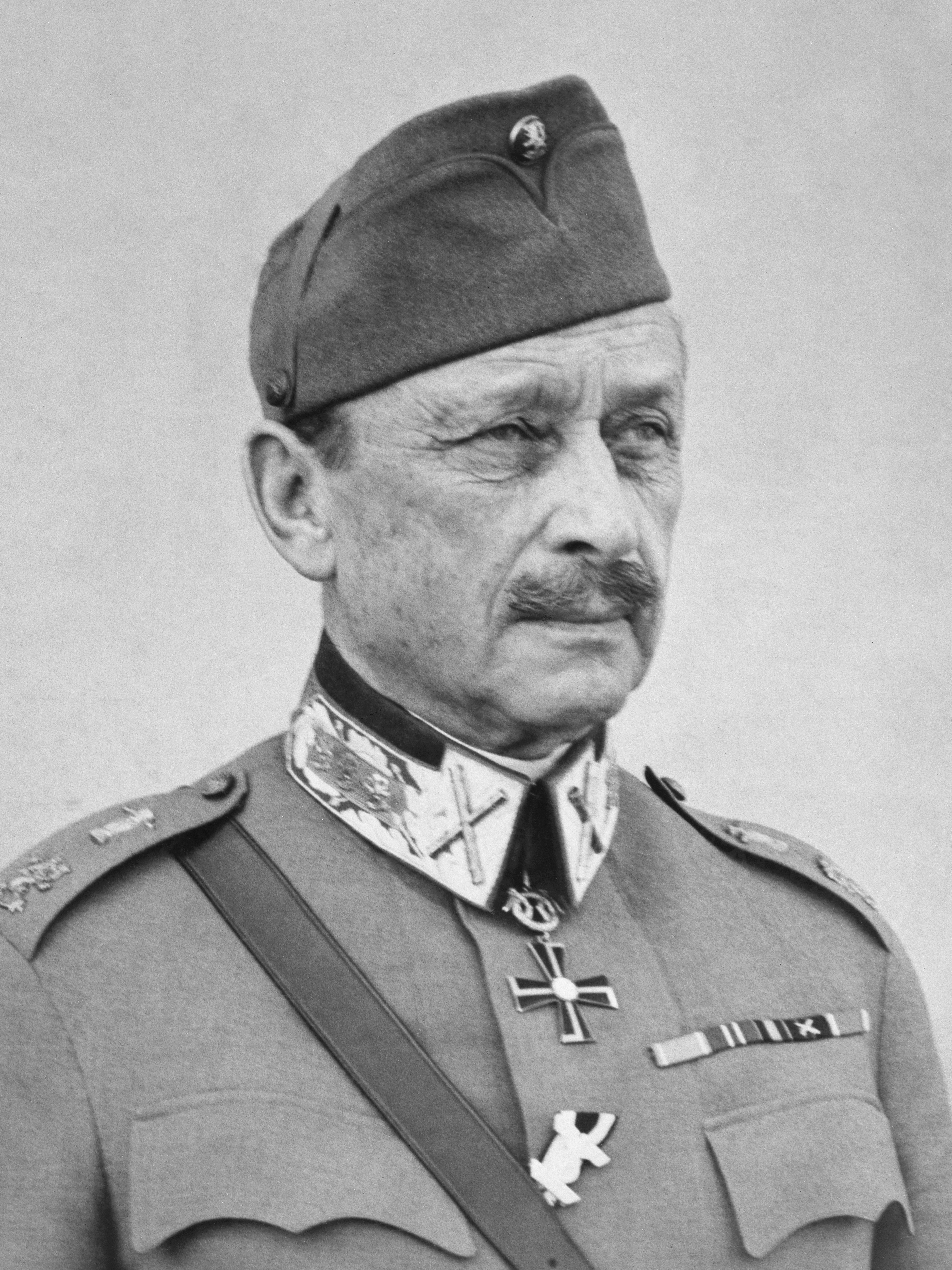
Carl Gustaf Emil Mannerheim
Finnish military commander, regent, and president who led Finland in the Civil War, the Winter War, and the 1944 armistice
of 100 · stable trend · Some good traits but inconsistent
Standing
50/100
Raw Score
44/85
Confidence
75%
Evidence
Strong
About
Mannerheim's public record is anchored in high-stakes national service: he helped preserve Finnish sovereignty in war, chaired the Finnish Red Cross for decades, and was trusted to lead the 1944 exit from the war. The deepest negative is that his command in 1918 remains inseparable from a White victory followed by executions, prison-camp deaths, and a legacy of class terror.
The observable pattern is mixed rather than simply heroic or simply condemnable. He repeatedly accepted burden under existential pressure and also invested authority in humanitarian institutions, but the record shows limited direct evidence of everyday private care and a major unresolved moral burden in the Civil War aftermath.
Five Pillars
Pillar scores (0–100%)
Mannerheim scores highest on resilience because the public record shows unusual steadiness in war and national crisis. He remains mixed overall because genuine humanitarian service and peace leadership coexist with the grave civic-moral burden of the 1918 White victory's reprisals and with limited visibility into private devotional life.
Goodness over time
Starts at 100 at birth, natural decay after accountability age, timeline events adjust the trajectory.
17 Criteria Scores
Individual item scores (0–5) with evidence notes
Core Worldview
Public record supports a practicing Lutheran baseline and a theistic moral outlook.
His language of duty, nation, and judgment suggests accountability beyond convenience, though not in richly theological public terms.
His public outlook appears grounded in providential and moral order rather than pure expediency.
Christian identity is visible, but scripture-guided public conduct is not richly documented.
The available record supports Christian belief better than explicit prophetic-model language.
Contribution to Others
Public evidence is concentrated on national and institutional service rather than family-specific care.
His authority helped build child-welfare and scouting-adjacent institutions that served young people.
Humanitarian work through the Red Cross supports a modest positive score, but direct poverty-relief evidence is limited.
Red Cross work and refugee-related decisions support a meaningful but not exceptional score.
The public record shows institutional responsiveness more clearly than personal case-by-case aid.
He defended Finnish sovereignty, but the same record is sharply complicated by coercion against defeated Reds.
Personal Discipline
Practicing Lutheran identity is public, but routine devotional evidence is limited.
Public gifts and institutional service suggest some disciplined giving, though direct evidence is thin.
Reliability
He showed duty and steadiness in state service, but the 1918 aftermath and hard wartime compromises keep integrity from rating highly.
Stability Under Pressure
The public record is not rich on personal scarcity, though he accepted demanding responsibility in lean national conditions.
His long career shows unusual endurance through illness, age, and immense burden.
His wartime command record is the strongest and clearest positive signal in the profile.
Timeline
Key events and documented turning points
Took command of the White forces in Finland's Civil War
In early 1918 Mannerheim became the military leader of the anti-socialist White forces, making him the central commander on the side that defeated the Reds and consolidated the non-Bolshevik Finnish state.
→ Helped secure the White victory and Finland's anti-Bolshevik path, but bound Mannerheim's legacy to a deeply divisive civil conflict.
highWhite victory was followed by executions and prison-camp deaths
The war ended with the defeat of the Reds, but the aftermath included harsh trials, executions, and prison-camp deaths on a mass scale. Mannerheim's command of the White side remains morally entangled with that bloody outcome.
→ Created the deepest enduring negative in Mannerheim's public record and left bloody memories among political opponents.
highUsed his stature to build humanitarian institutions
Mannerheim accepted the chairmanship of the Finnish Red Cross in 1921, remained chairman until his death, worked actively in the organization in the interwar years, and his authority also helped establish the Mannerheim League for Child Welfare. Official accounts further credit him with securing vitamins for Russian prisoners of war in 1942.
→ Created a durable public-service strand in his legacy that reached beyond battlefield leadership.
mediumLed Finland's defense in the Winter War
After the Soviet attack on 30 November 1939, Mannerheim took command of Finland's forces and became the face of the country's resistance against a far larger military power.
→ The defense imposed heavy costs on the Soviet Union and helped preserve Finnish independence despite territorial losses.
highBecame president to carry Finland into armistice and peace
Parliament chose Mannerheim as president in August 1944 because he was widely seen as the only figure capable of leading Finland out of war while keeping the army and state together. He broke with the Ryti arrangement that blocked separate peace and consented to armistice.
→ Helped Finland leave the war and preserve state continuity, though under severe external constraints and painful concessions.
highPressure Tests
Behavior under crisis or scrutiny
Civil War command
1918Mannerheim led the White side in Finland's civil conflict at the moment the country was deciding whether it would survive as an independent non-Bolshevik state.
Response: He showed strategic steadiness and command authority, but the victory was followed by reprisals and prison-camp suffering that leave the pressure response morally mixed.
mixedWinter War
1939The Soviet Union attacked Finland with overwhelming force.
Response: He accepted command and became the focal point of a disciplined national defense that preserved independence despite heavy losses.
positivePresidency and armistice
1944Finland faced military exhaustion, German decline, and the risk of national collapse.
Response: He accepted the presidency, consented to armistice, and used personal credibility to carry the army and state through a difficult turn toward peace.
positiveProgression
crisis years
The Winter War and Continuation War showed maximal resilience and strategic authority under external pressure.
upcurrent stage
His settled historical reputation remains mixed: revered as a defender of Finland, yet permanently shadowed by the violence attached to the White cause and the coercions of wartime statecraft.
stableearly years
Service in the Imperial Russian Army formed a disciplined officer identity before Finland's independence crisis redirected his loyalty.
upgrowth years
The 1918 Civil War and regency years made him a founding-state figure but also fixed the most divisive element of his legacy.
mixedBehavioral Patterns
Positive
- • Repeatedly accepted high personal responsibility when Finland faced existential external threat.
- • Used prestige to sustain long-running humanitarian institutions such as the Finnish Red Cross and child-welfare work.
Concerns
- • The 1918 White victory left a legacy of executions, prison camps, and class trauma that remains central to his moral record.
- • Public evidence of direct, everyday care for family life, poverty relief, and devotional routine is limited.
- • His leadership often looked protective at the national level while remaining harsh or morally compromised at the level of defeated opponents.
Evidence Quality
7
Strong
3
Medium
0
Weak
Overall: strong
This profile evaluates observable public behavior and evidence, not the state of a person's soul.