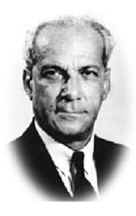
Norman Washington Manley
Jamaican statesman, lawyer, People's National Party cofounder, chief minister, and premier who helped lead Jamaica to self-government and independence.
of 100 · stable trend · Visibly decent and improving
Standing
57/100
Raw Score
47/85
Confidence
74%
Evidence
Strong
About
Manley's public record is strongest where constitutional reform, labor advocacy, and anti-colonial nation-building produced tangible gains for ordinary Jamaicans. His record is less complete on private worship and family-specific care, and it carries a real caution in the expulsion of left-wing colleagues and the failed 1961 federation gamble.
The observable pattern is meaningfully positive: he repeatedly moved public power toward suffrage, cabinet government, workers' interests, and formal independence, while also accepting defeat within democratic rules. The score stays below exemplary because available sources are thinner on devotional discipline and because some episodes show limited tolerance for ideological rivals.
Five Pillars
Pillar scores (0–100%)
Manley scores best where public power was used to widen political voice, support workers, and complete a constitutional path to independence. The overall score remains moderate because the evidence base is much thinner on private worship and direct personal charity, and because parts of his political record show hard-edged treatment of internal dissent.
Goodness over time
Starts at 100 at birth, natural decay after accountability age, timeline events adjust the trajectory.
17 Criteria Scores
Individual item scores (0–5) with evidence notes
Core Worldview
Public record suggests a moral and theistic frame, but explicit personal creed evidence is limited.
His public language emphasized duty and responsibility, though not in strongly devotional terms in accessible sources.
Limited direct evidence beyond broad moral seriousness.
Some public moral language aligns with Christian social teaching, but evidence is not rich.
Little public evidence on prophetic modeling specifically.
Contribution to Others
Public record does not surface much family-specific care evidence.
Broader democratic reform may have benefited young people, but direct evidence is limited.
Labor and welfare-oriented reforms strongly point toward material concern for struggling households.
Indirect public evidence only.
His role in the labor upheaval and Bustamante release points to practical response to public pressure.
Suffrage reform and independence work are strong evidence of helping free people from colonial and political constraint.
Personal Discipline
Routine private devotion is not well documented in accessible public sources.
Some public ethic of service is visible, but disciplined personal charity is not richly documented.
Reliability
He accepted the referendum outcome and still completed the constitutional work toward independence.
Stability Under Pressure
Childhood loss and limited family resources did not prevent his rise, though details are thin.
War service, bereavement, and chronic illness show durable endurance.
Military service under fire and later political pressure provide strong evidence of steadiness.
Timeline
Key events and documented turning points
Received the Military Medal after frontline service in World War I
Manley's Oxford studies were interrupted by the First World War; he served in the Royal Field Artillery in northern France and later returned to complete his law degree after being decorated for gallantry under fire.
→ This established an early public pattern of steadiness under danger rather than withdrawal from duty.
mediumHelped turn labor unrest into organized party and union politics
During the upheavals of the late 1930s, Manley worked in union activity, recruited supporters across the island, and founded the People's National Party, giving the labor struggle a durable political vehicle.
→ He helped move worker discontent toward institutional politics instead of leaving it only as street-level grievance.
highPlayed a key role in constitutional reform and universal adult suffrage
Official Jamaican constitutional history credits Manley with helping secure the 1944 constitutional reform that brought universal adult suffrage and widened political participation.
→ The reform materially expanded political voice and laid foundations for mass democratic participation.
highEntered government and advanced labor and small-business reforms
After the PNP's 1955 victory, Manley became chief minister and his administration is credited in public historical summaries with measures such as small-business assistance, sugar-worker pensions, and labor-welfare regulation.
→ The public record supports a pattern of trying to convert political power into concrete economic and workplace protections.
highAccepted defeat in the federation referendum and pivoted to independence
Manley strongly backed Jamaica staying in the West Indies Federation, called a referendum when the issue became unavoidable, lost that vote, and then moved to arrange withdrawal and pursue independence on its own track.
→ The episode exposed a real political misreading, but it also showed democratic acceptance of an adverse public verdict.
highChaired the constitution committee and led the final independence negotiations
Official accounts describe Manley as chairman of the Joint Independence Constitution Committee and the leader of Jamaica's final negotiations with Britain on the terms of independence.
→ This was the capstone of his public career and the clearest large-scale proof that his nation-building commitments produced durable constitutional results.
highRetired because of illness after repeated heart attacks and died later that year
The National Library of Jamaica notes that a series of heart attacks dating from 1953 forced Manley into retirement in 1969; he made a final public appearance in July and died in September.
→ His public life closed with a reputation for long service rather than a collapse into scandal or abandonment.
mediumPressure Tests
Behavior under crisis or scrutiny
World War I frontline service
1917His studies were interrupted by war, and he served under fire in the Royal Field Artillery.
Response: He returned to finish his education and later carried that discipline into public life.
positiveFederation referendum defeat
1961His pro-federation position lost Jamaica's first national referendum.
Response: He accepted the result and shifted into negotiating Jamaica's separate independence rather than sabotaging the outcome.
mixedIllness and retirement
1969Long-running heart trouble forced him from active politics.
Response: He remained publicly identified with service and exited because of failing health rather than disgrace.
positiveProgression
crisis years
The federation battle tested both his judgment and his democratic restraint.
mixed_but_resilientcurrent stage
His settled legacy is broadly constructive, though not spotless, because major constitutional achievements sit beside thinner evidence on private devotion and some hardline party decisions.
settled_legacyearly years
Scholarship, war, and legal training produced a disciplined public temperament before mass politics.
upgrowth years
From the late 1930s into the 1950s, his influence widened through labor-linked party building and democratic reform.
upBehavioral Patterns
Positive
- • Repeatedly preferred institution-building over pure symbolism.
- • Linked workers' struggles to constitutional reform and mass political participation.
- • Accepted democratic loss without abandoning public duty.
Concerns
- • The Four Hs expulsion suggests limited tolerance for ideological dissent inside his own movement.
- • Private devotional and family-care evidence is too thin to support a stronger spiritual-discipline reading.
Evidence Quality
7
Strong
3
Medium
0
Weak
Overall: strong
This profile evaluates observable public behavior and evidence, not the state of a person's soul.